

Xploration • Curation • Recommendation


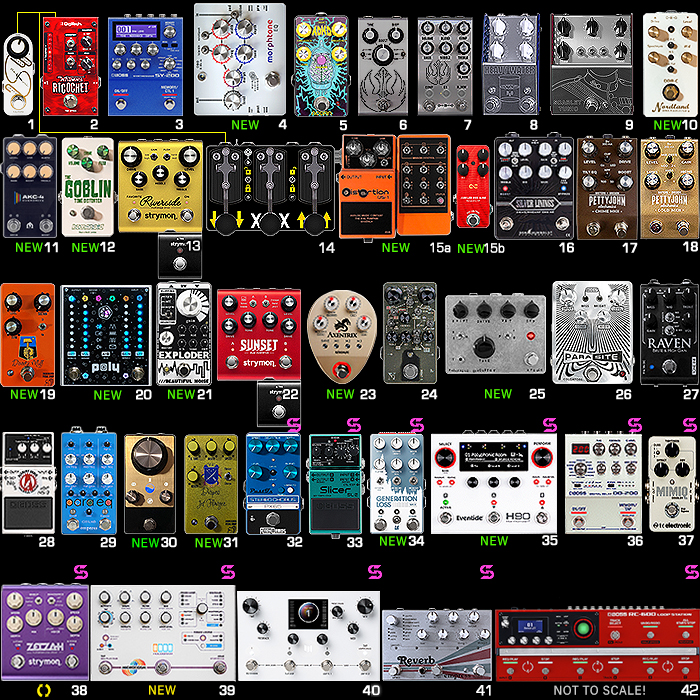
Based on the EFE Black Acid - Humanoid's Goblin Tone Distorter is a Gloriously Punchy 2-Transistor Full Fat Fuzz


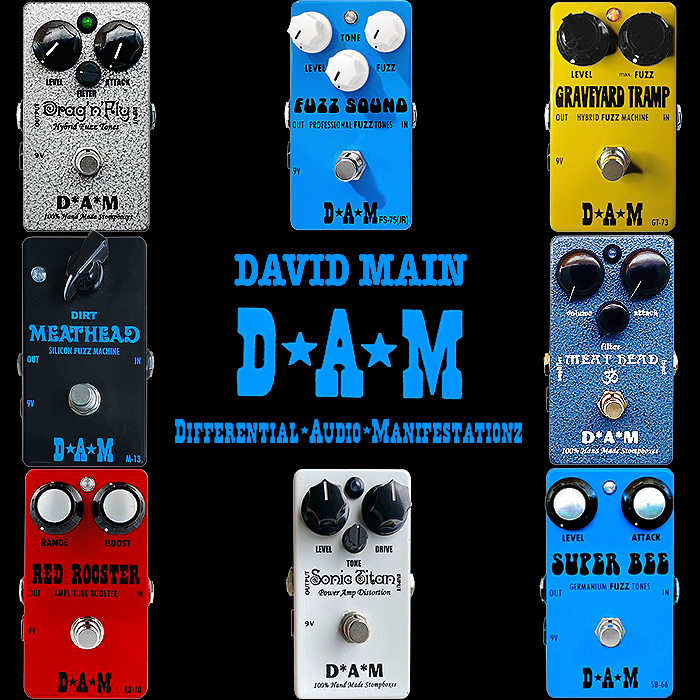
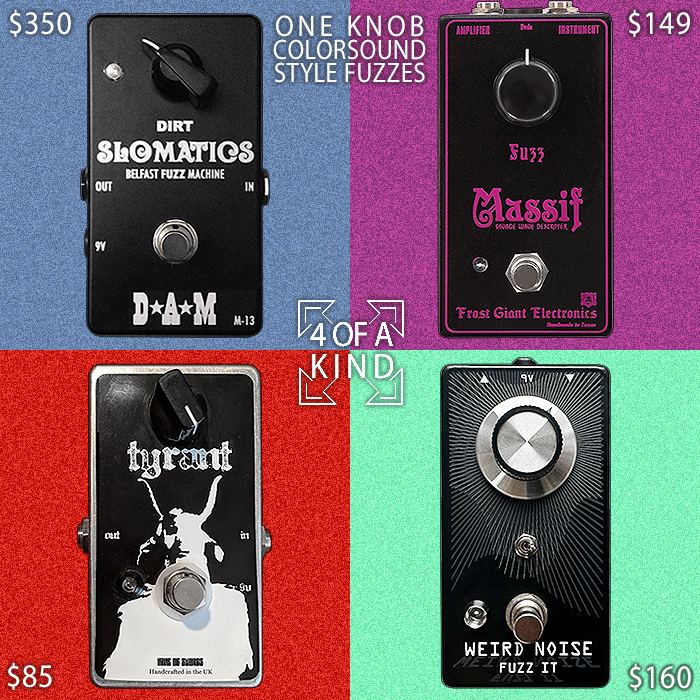
Most are familiar with D*A*M’s Meathead variants of 2-Transistor Fuzz - available in both Original single-knob and Deluxe 3-knob editions - where the topology of the latter is Volume, Filter and Attack. The Meathead is of course a derivation of the celebrated 70’s Colorsound One-Knob Fuzz Box.
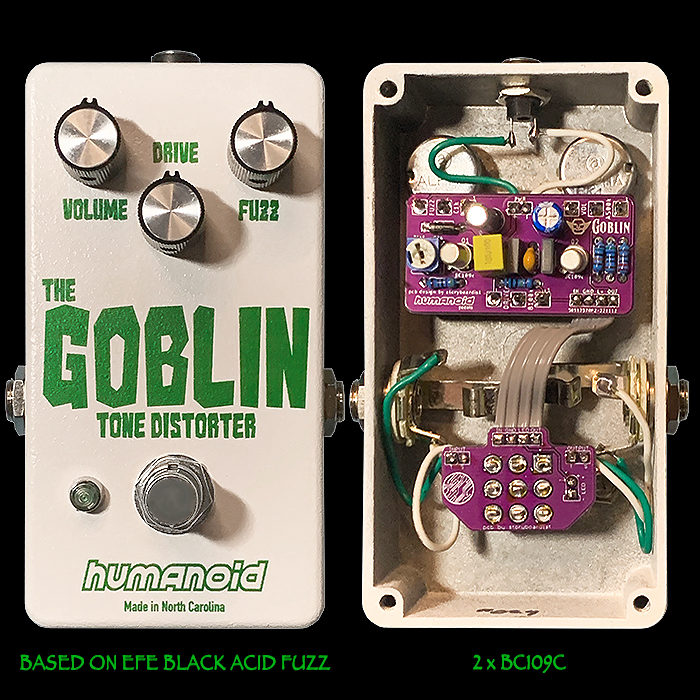
And so in turn this Goblin Tone Distorter is based on a really rare and unique variant of the same sort of circuit - the Black Acid Tone Distorter - made this time by D*A*M’s sister brand - Emanating Fist Electronics around 2012 or so.
Controls - Volume, Drive, Fuzz.
The Goblin Tone Distorter has two sort of gain controls - Drive and Fuzz - which have a wonderful interplay in terms of changing the character and dynamics of the output. These kinds of 2-transistor fuzzes are essentially high gain Fuzz Faces with extended low-end frequency response - which space is also occupied by the superb Os Mutantes Regulus VIII variant.
The combination of BC109C Silicon Transistors and the two gain knobs - where Fuzz is essentially equivalent to the Deluxe Meathead’s ’Attack’ control - yields superior visceral fuzz textures.
Most Meathead variants have a slightly ’muddier’ low end to them, while the Goblin is gutsy - but really punchy too with somewhat unusual note clarity for this genre.
There is plenty of range on each of those knobs - including ample Volume. While I get the best texture and harmonics - with the Volume @ Max, Drive @ c3 o’c, and Fuzz @ around 11 o’c. You need to dial the last bit in by ear / feel / touch - kind of in safe-cracker mode - until you hear those superior harmonics snap in.
If you crank the gain controls stoo much - you get some odd kind of compression, and the signal chokes out a fraction - so around 3 o’c is really the maximum usable gain range for my preferences. It really sounds wonderfully calibrated and particularly well balanced.
If you already have a Meathead - this is actually a somewhat different and more articulate fuzz than that - still with tonnes of satisfying texture and gain on tap.
I had thought about changing up the knobs - possibly to something a little more metallic - while I really quite like the look of the pedal as is.
It’s really easy to dial in - and there’s plenty of variation available in particular from the interplay of the Drive and Fuzz controls.
This is another distinct fuzz variant which deserves a place in your collection. The currently discontinued Black Acid original is obviously a larger (BB-enclosure) and pricier proposition. The Humanoid Goblin is exactly the same circuit with the same high quality parts - including those really great sounding BC109C metal can transistors - so a much more pedalboard-friendly proposition all-round. This comes highly recommended.
Available for order from the Humanoid Pedals Webstore - for just $99. There’s also a slightly pricier all-black Limited edition available - while I like the idiosyncrasy and colour-matching to the ’Green’ Goblin moniker!
Demos





Content Subscriptions