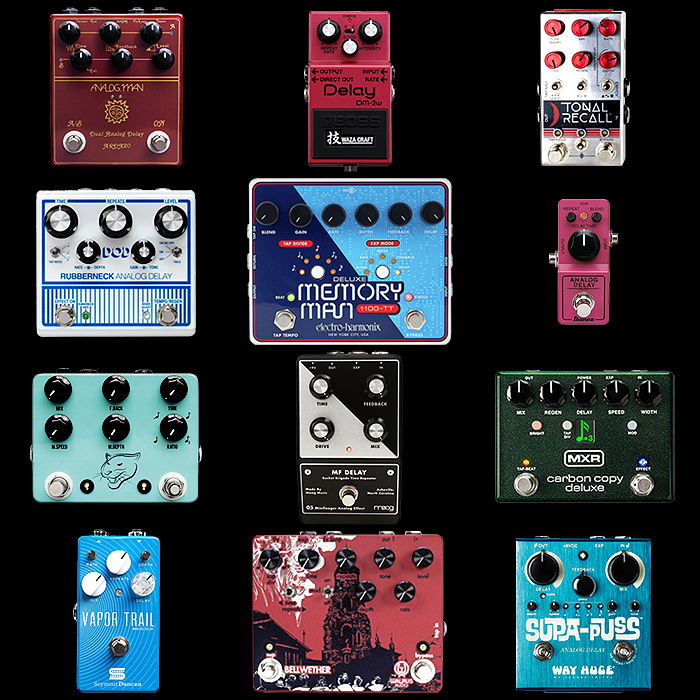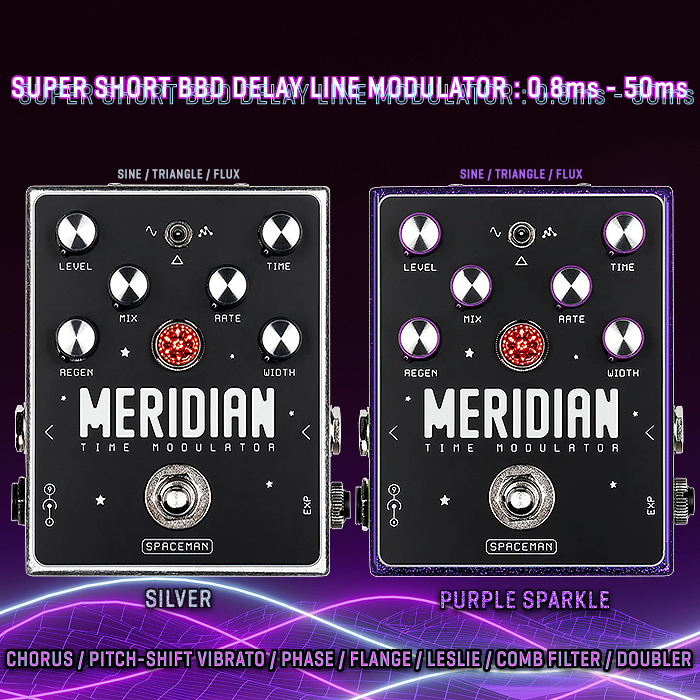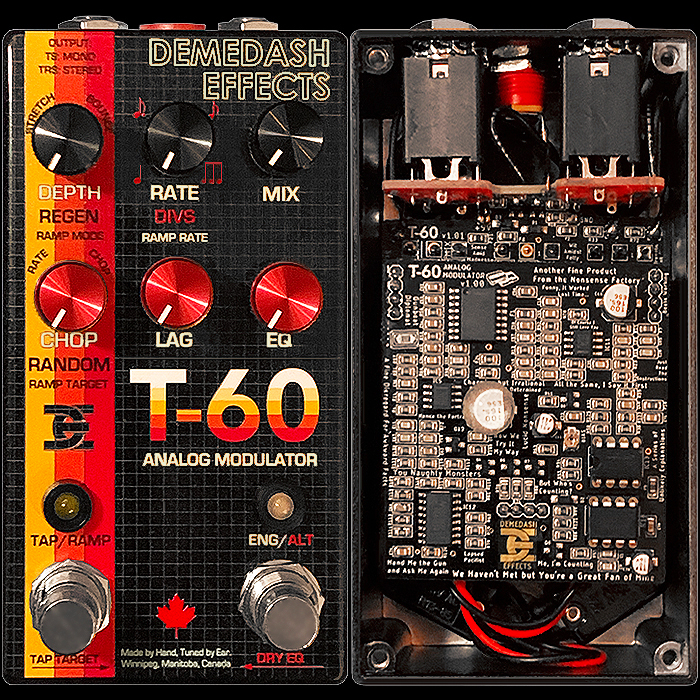


Xploration • Curation • Recommendation


A Brief Hobbyist Primer on BBD's - Bucket Brigade Devices


A Bucket Brigade Device (BBD) is an analog electronic circuit (Integrated Circuit Chip) that delays an audio signal by using a series of capacitors to ’hold’ and ’pass’ tiny samples of the signal, much like a line of people passing buckets of water. The signal is moved from one capacitor to the next within each ’Clock Cycle’, and the speed of this transfer can be adjusted to change the Delay Time - typically regulated by a further ’Clock Chip’.
In accordance with this feature, the Max Delay Time for BBD’s covers a vast spread - and is usually determined by the number of ’Stages’ in a BBD Chip / Package. You can see here that Max Delay Time can vary from 12,8ms up to and over 4,000ms. The number of Stages typically varies from 256 to 4096. Where the stages double up as you move up though the range!
There are essentially 2 categories of BBD - Short and Long Delay Line types. Where the Short ones are typically used for Chorus / Vibrato / Flanger, and the Long for Echo and Delays.
Historically 2 brands have dominated this category - in the past Matsushita / Panasonic of Japan, and the Reticon Coporation of California, USA. Matsushita kind of dominated the applications thoughout the 80’s - while Reticon was an early favourite!
And contemporaneously we now have CoolAudio of China (Behringer), and Xvive of California, USA - who just make a handful of modern devices - replicas of some of the most popular Matsushita / Panasonic types - while the breath and variety of the older vintage ones has now lapsed - and there are just 2 Chips really which dominate the current landscape - CoolAudio’s V3207, and Xvive’s MN3005!
There is evidently some complexity in the production of these devices - which means that at this time, and as far as I’m aware, there are just 3 active BBD makers in the world - the aforementioned CoolAudio and Xvive, and also Sound Semiconductor (SSI) - also based in China.
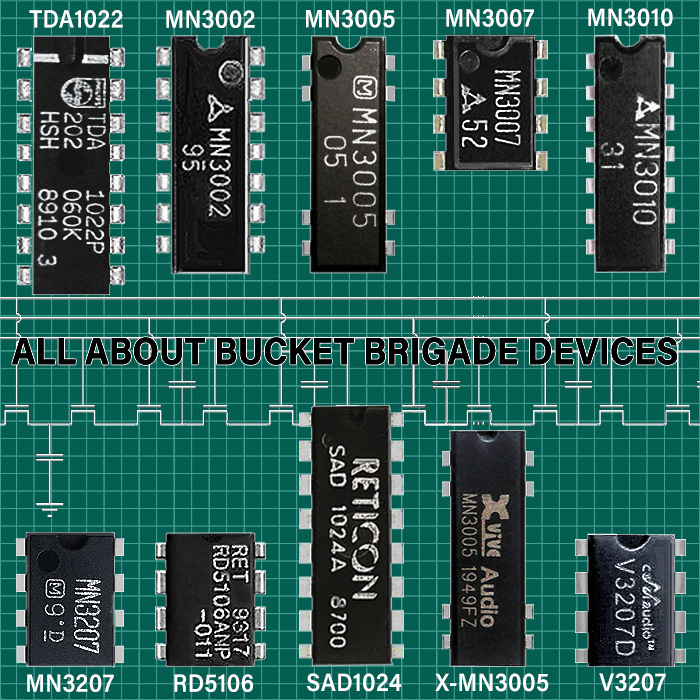
Interestingly the BBD was first invented by the Philips Research Labs in the Netherlands - specifically F. Sangster and K. Teer in 1968/69. The Philips Research Labs was so good at inventing new consumer electronics devices - while this was yet another one that they failed to fully profit from. Based on their research Philips Semiconductors released the first commercially available BBD in 1969 - the TDA1022. That was the most significant Philips BBD, but even though there was a significant Philips Range of BBD’s none of those ended up powering any of those legendary pedal devices of the late 70’s and 80’s - at least not as far as I’m aware.
The structure of this article is as follows :
- How BBD Bucket Brigade Devices Work
- The 4 Key BBD Package Types / Formats you’re likely to encounter
- Key Classic Vintage BBD Types by Brand
- Modern / Contemporary BBDs by Brand
- Most Famous BBD Applications - Pioneering and Legendary Analog Modulations and Delays
- PastFX Key BBD Applications - Mostly Matsushita
I did have the perfect collaboration partner in mind for this feature, while they alas declined to paricipate in order to preserve their privacy and anonymity. This means that we alas won’t have insights from the coal-face like we had for the previous one on Capacitors - while I do my best here to provide as much breadth and depth as I can muster!
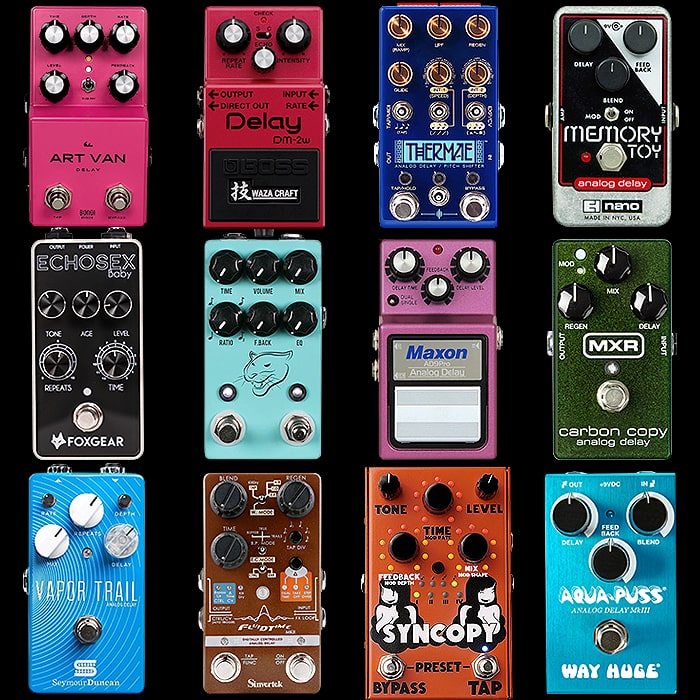
In the above and below main cover visual - I list the most enduring BBD’s - starting with a version of the very first commercial relapse - the Philips TDA1022, check the following listings for the remained - all get a decent mention and contextual reference!
How BBD Bucket Brigade Devices Work
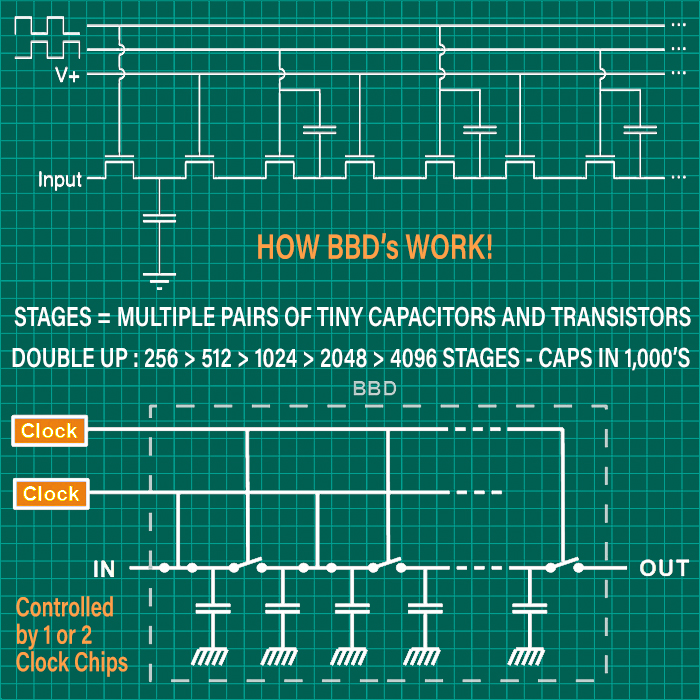
A BBD essentially converts a continuous analog signal into a time-discrete, but amplitude-continuous, sampled signal, and shifts it through a series of storage units (Capacitor Stages / Buckets!).
SAMPLING AND STORAGE - The incoming audio signal is sampled at a rate determined by an external Clock Circuit / Clock Chip. Each sample's voltage level is captured and stored as an electrical charge in a tiny capacitor ('bucket').
CHARGE TRANSFER - A two-phase clock signal (Clock Chip) controls a series of switching transistors connected between the capacitors. The alternating clock pulses cause each capacitor to pass its stored charge to the next capacitor in the line, one step / bucket at a time. :
DELAY CREATION - The cumulative time it takes for the signal's charge to move through the entire chain of Capacitor Stages creates a time delay. The longer the chain (i.e the more 'Stages' or Capacitors) and the slower the clock frequency - the longer the resulting delay time.
OUPUT AND RECONSTRUCTION - The delayed signal emerges from the end of the capacitor chain. Since the output is a stepped, sampled signal, it is passed through a low-pass filter to smooth it out and reconstruct a continuous analog waveform, removing high-frequency artifacts (clock noise and aliasing).
SURROUNDING CIRCUITRY
The raw output from a BBD chip is typically noisy and distorted. To achieve the classic 'warm' analog sound, the BBD chip is part of a larger circuit that includes :
ANTI-ALIASING FILTERS - are placed before the BBD to remove high frequencies that the device can't / doesn't handle well.
A COMPANDER CIRCUIT - improves signal-to-noise ratio. The signal is compressed byerfot the BBD, and expanded after it, reducing the noise that is introduced during the delay - sequential bucket progress process!
FEEDABCK LOOPS - these are controlled by a 'Feedback / Repeats' knob typically - that sends a portion of he delayed signal back into the input of the circuit - creating echoes and oscillation effects.
KEY ChARACTERISTICS
ANALOG NATURE - unlike Digital Delays that convert the signal to binary data, BBDs manipulate the signal's actual voltage as an analog charge - contributing to their unique sonic character.
SIGNAL DEGRADATION - the nature of a BBD circuit results in some signal loss, and the introduction of additional note and distortion during each transfer between capacitors / buckets. The inherent imperfections give BBD delays their distinctive dark, warm, and rich sound - that so many guitarists prefer over the 'sterile' quality of certain digital units.
LIMITED DELAY TIME - Longer delays simply require more Capacitor Stages - which extension leads to increased signal degradation. This places practical limits on the 'Clean' delay time achievable with BBDs.
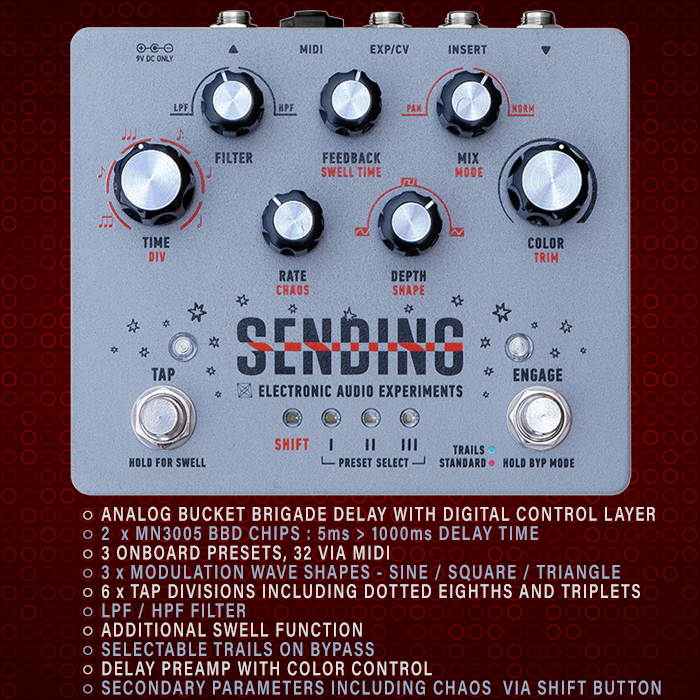
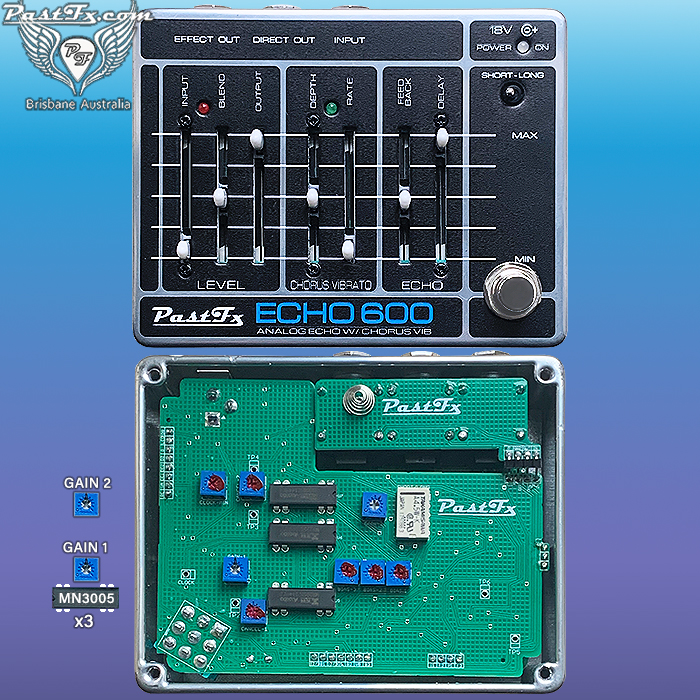
COMBINING BBDs AT LOWER RATES - You can typically achieve circa 300ms out of each MN3005 BBD - so for a typical 600ms delay time - you would need at leat 2 x MN3005 BBDs. While many builders use 3 x MN3005's to deliver that same 600ms - multiple BBDs in this format / array typically give you better fidelity in output - including less noise / distortion and artefacts!
BBD DELAY RANGES FOR DIFFERENT EFFECTS
BBD effects use distinct delay time ranges to create Chorus, Flanger, and Pure Delay (Echo) Effects. Flanging uses the shortest times, Chorus uses Medium times, and traditional delay uses the Longest times - as detailed below!
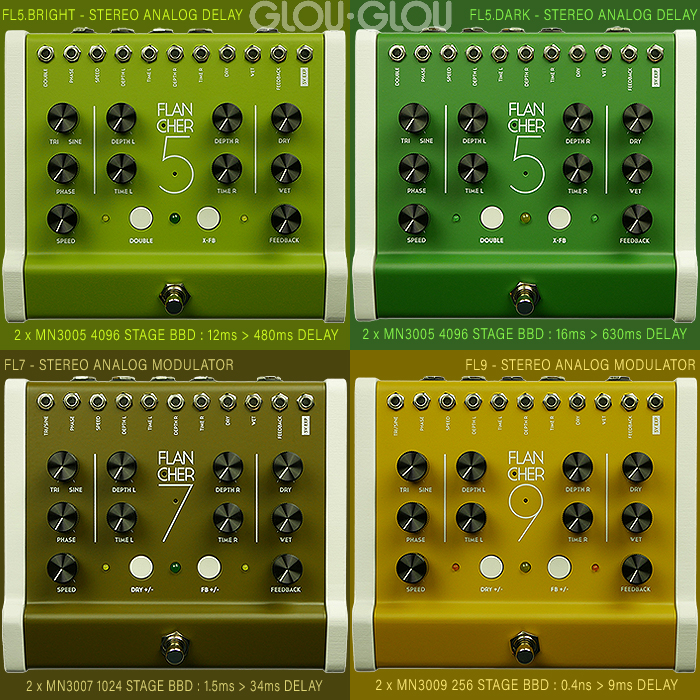
FLANGER : 0.1ms – 10ms : Produces a prominent swept comb filter effect, often with high feedback (Regeneration). The short, modulated delay time causes a constantly changing phase cancellation (notches) in the frequency spectrum, creating the characteristic "swooshing" sound.
CHORUS : 5ms – 50ms : The longer delay times create a perceived pitch modulation (Doppler effect) rather than a comb filter sound. When mixed with the original signal (typically with no or very low feedback), it simulates the sound of multiple instruments playing slightly detuned, adding richness and width. Chorus is 50% Wet / 50% Dry Signal - make the Wet 100% and you get VIBRATO!
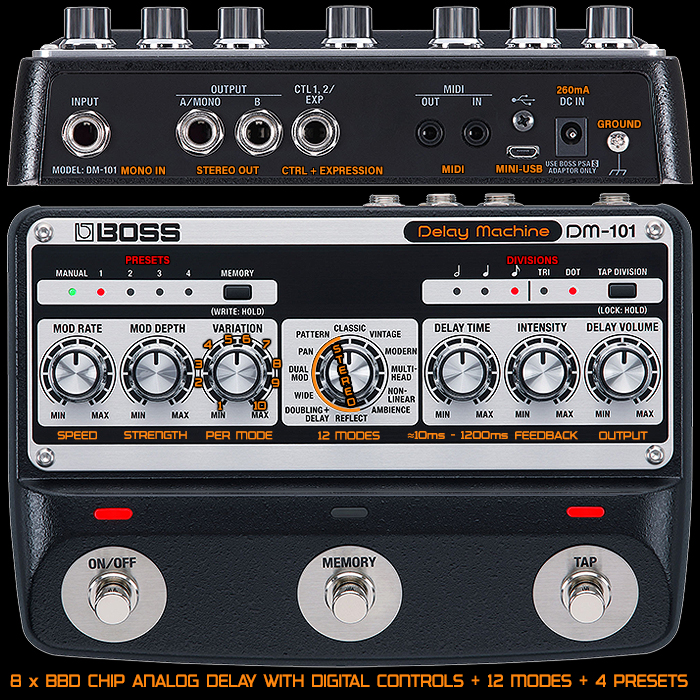
PURE DELAY / ECHO : 50ms – 1000ms+ and Longer : distinct echoes are perceived as separate repeats rather than a thickening or modulation effect. BBD chips are typically limited in their maximum delay time compared to digital delays, with common analog pedals like the BOSS DM-2 offering 20-300 ms, or high-end units reaching 1000ms+.
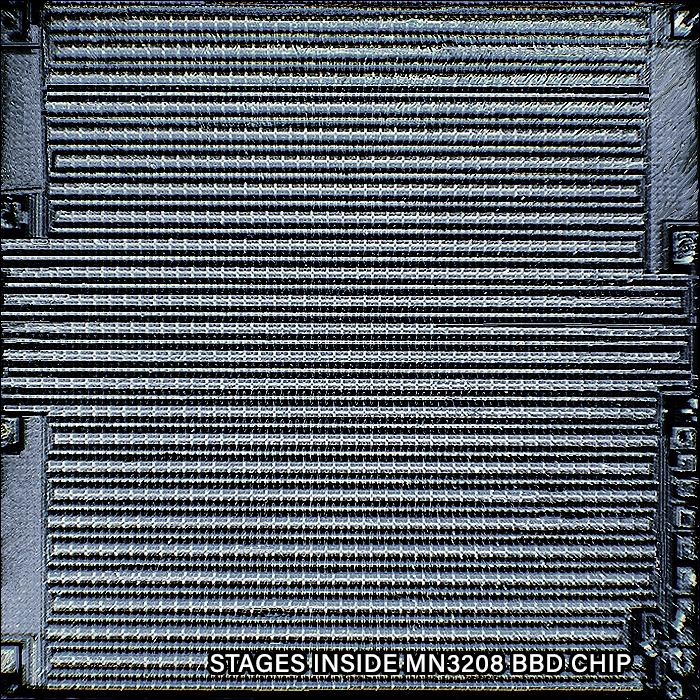
Cross-section of part of a Decapped MN3208 BBD Chip [2048-Stages!] - as below - you can kind of picture all those tiny pairs of Capacitors and Transistors - up to 46 in a row as far as I can make out - they're so tiny - I keep losing count! BBD slightly damaged as part of decapping exercise (removing part of the plastic surround!).
The 4 Key BBD Package Types / DIP Formats you’re likely to encounter
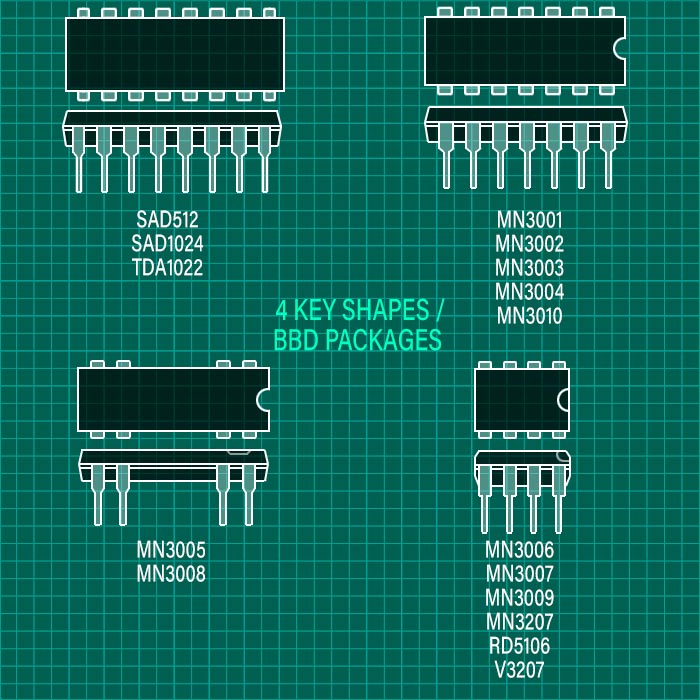
The above quartet of BBD Formats - covers pretty much all the applications I'm familiar with - and represents the most typical styles you will find in classic Audio Devices / Pedals.
Bucket Brigade Devices (BBDs) typically come in Dual Inline Package (DIP) formats - in a variety of Pin counts and two main widths : 0.3 inches (narrow DIP) and 0.6 inches (wide DIP).
COMMON BBD DIP FORMATS
The format is generally described by the number of pins and the row spacing (width). Pin counts are always an even number.
By Pin Count and Width :
- 8-pin DIP - Used for smaller BBD chips or auxiliary components like op-amps, typically in the 0.3-inch width. [as per MN3007, MN3207, RD5106, and V3207]
- 8-in DIP Elongated - per MN3005 and MN3008 BBD Chips - pins more spaced out!
- 14-pin DIP - A common format for various integrated circuits. [per MN3002, and MN3010]
- 16-pin DIP - A widely used format. The Reticon SAD-1024, an early BBD chip, used a 16-pin DIP. [per SAD512, SAD1024, and TDA1022]
- 20-pin DIP - Used in some applications.
- 24-pin DIP- Often found in the wider 0.6-inch spacing.
- 28-pin DIP: Also common in the wider 0.6-inch spacing.
- 40-pin DIP: Used for more complex BBD ICs and those with higher pin requirements.
Key Classic Vintage Types by Brand
KEY VINTAGE / CLASIC BBDs
MATSUSHITA / PANASONIC
- MN3002 - 512-stage BBD for short delay times, delay time pf up to 25.6ms
MN3005 - 4096-stage BBD for long delay times, delay time of between 20.48ms to over 300ms
MN3007 - 1024-stage low-noise BBD, commonly used for chorus and delay effects. Delay time of between 5.12ms and 51.2ms
MN3008 - 2048-stage low-noise BBD, also used for delay effects. Delay time of between 10.24ms to 102.4ms
MN3009 - 256-stage BBD, often used for shorter delays or chorus effects. Delay time of between 0.64 ms to 12.8 ms
MN3010 - Dual 512-stage low noise BBD. Delay time of up to 25.5ms
MN3204 - 512-stage low-voltage operation BBD (VDD=5V). Delay time of between 1.28 milliseconds (ms) to 25.6 ms
MN3205 - A 4096-stage low-voltage BBD. Delay time of up to 204.8ms
MN3207 - 1024-stage low-voltage BBD. Delay time of up to 51.2 ms
MN3208 - 2048-stage low-voltage BBD. Delay time of between 10.24 ms to 102.4 ms
MN3209 - 256-stage low-voltage BBD. Delay time of between 0.25ms and 12.8ms
MATSUSHITA / PANASONIC CLOCK CHIPS
- MN3101 - for the MN300x series BBD's
- MN3102 - for the MN320x series BBD's
PHILIPS RESEARCH LABS / PHILIPS SEMICONDUCTORS
- Inventor of BBD in 1968/1969 - by F. Sangster and K. Teer @ Philips Research Labs. Creator of first commercially available BBD - the TDA1022
- TDA1022 - 512-stage analog delay line. Delay time is between 0.512ms and 51.2ms
RETICON CORPORATION
- RD5106 - 256 / 512-stage delay line device. Delay time of 0.512ms to over 1000ms
- RD5107 - 1024-stage delay line device. Delay time of 1ma to over 2000ms
- RD5108 - 4096-stage delay line device. Delay time of 2ms to 4000ms
- SAD-512 - single 512-stage delay line device. Delay time up to 170ms
- SAD-1024 - integrated circuit featuring two 512-stage delay lines. Delay time up to 340ms
- SAD-4096 - chip with a 4096-stage delay line. Delay time of 40ms to 400ms
Modern / Contemporary BBDs by Brand
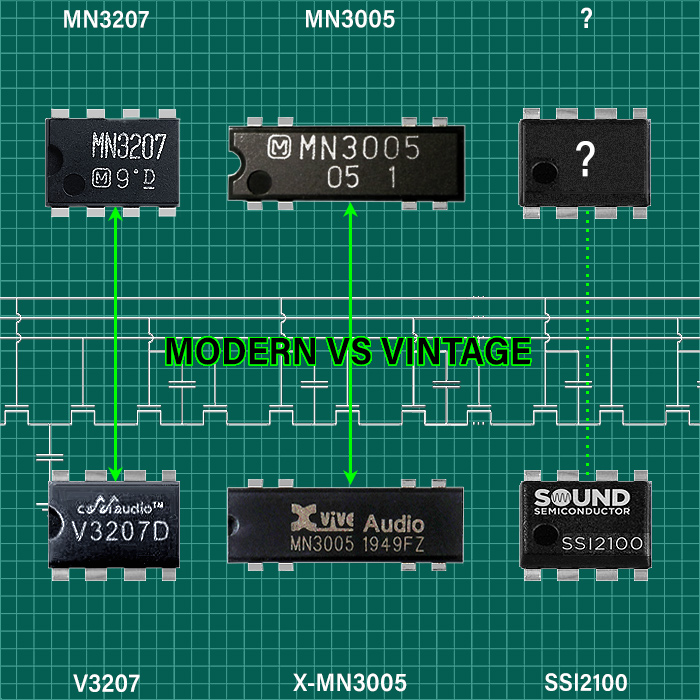
- V3102 - Two-Phase Clock Generator for BBD's
- V3205SD - 4096-Stage Low-Noise BBD Analog Delay Line, delay of up to 204.8ms
- V3207 - 1024-Stage Low-Noise BBD Analog Delay Line, delays of up to 51.2 ms
- V3208D - 2048-Stage Low-Noise BBD Analog Delay Line, delay of up to 102.4ms
- MN3005 - 4096-stage long-delay BBD—eight times longer than a 512-stage BBD! Delay of up to 205 ms
- MN3007 - 1024-stage, low-noise, long-delay BBD that provides a signal delay of up to 51.2 milliseconds
- MN3009 - 256-stage BBD that boasts a wide dynamic range and low distortion. Its signal delay of up to 12.8 milliseconds
- SSI2100 - 512-Stage Bucket Brigade Delay. Delay time of 1ms to over 1000ms
- Not clear as to which classic BBD this one substitutes for - surely someone in the know can advise!
Most Famous BBD Applications
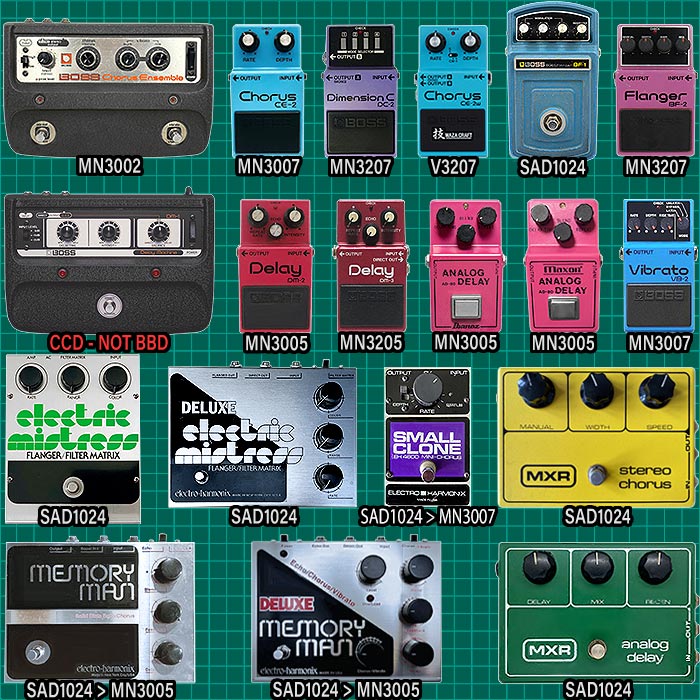
I tried to get as many of these into the visual as possible! Kind of ran out of space in the end - it's still a pretty solid overview though! :
KEY CLASSIC BBD APPLICATIONS!
- MN3002 - Roland JC-120, Boss CE-1
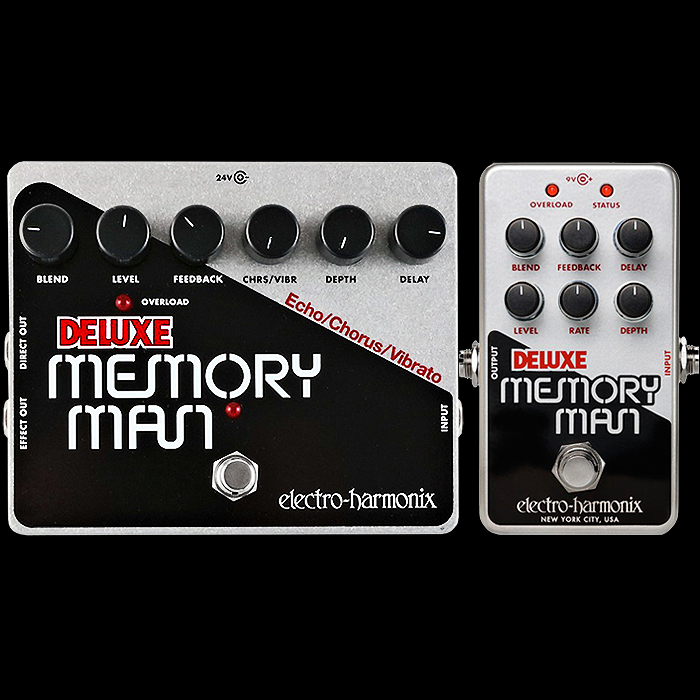
- MN3005 - Boss DM-2, Later EHX Memory Man Delays, Ibanez AD80 Delay, Maxon AD80 Delay
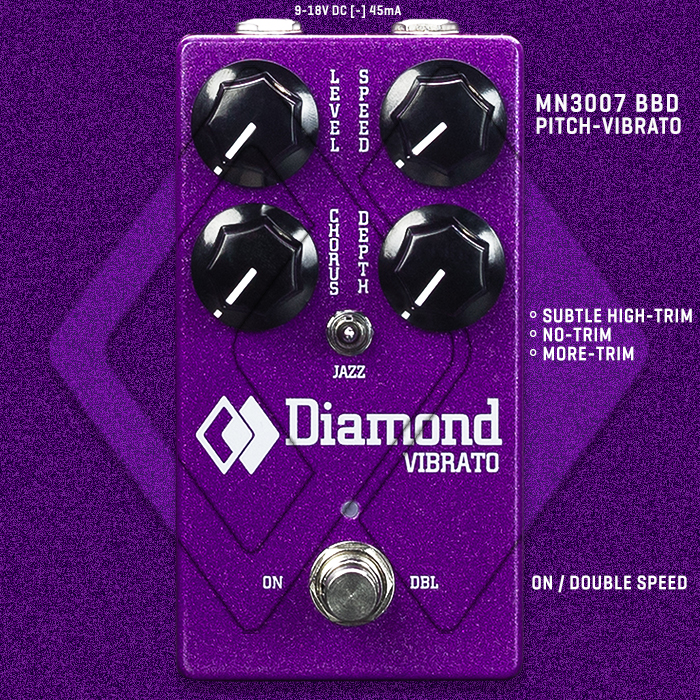
- MN3007 - Roland Dimension D, Boss CE-2, Boss VB-2, Later EHX Small Clone, Yamaha E1010
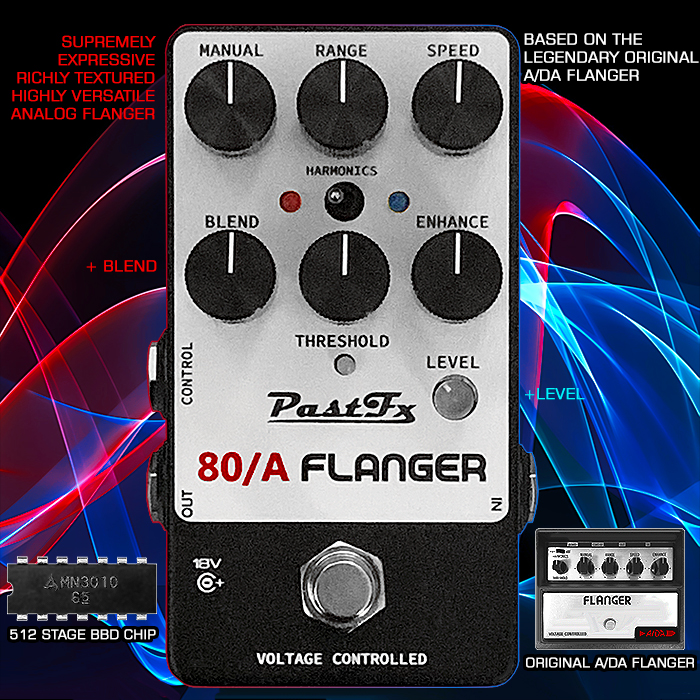
- MN3010 - ADA Flanger
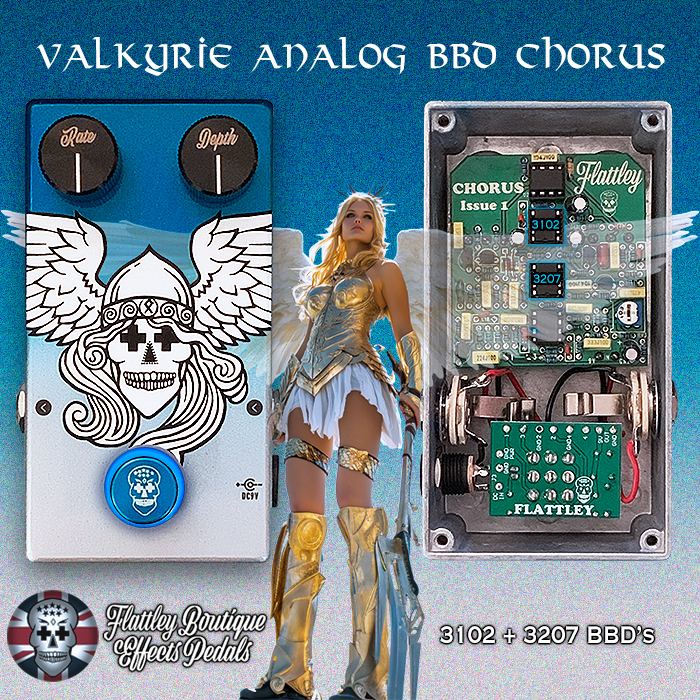
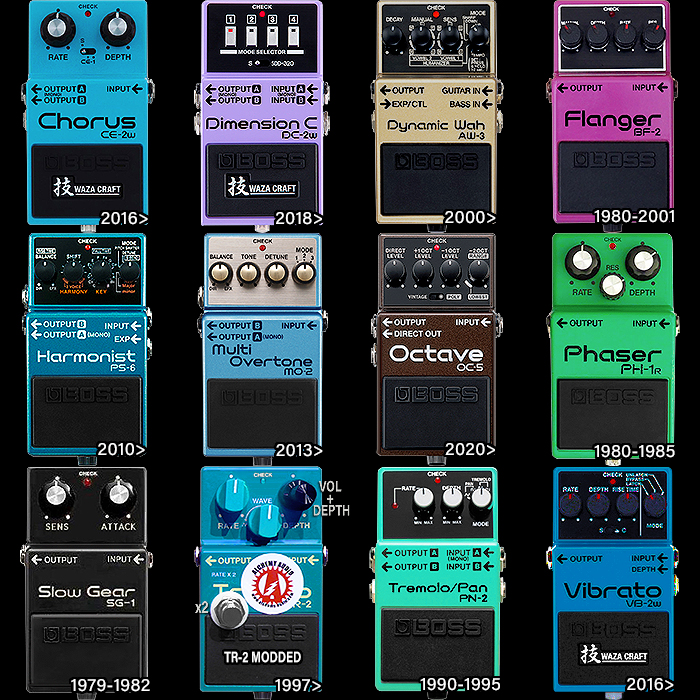
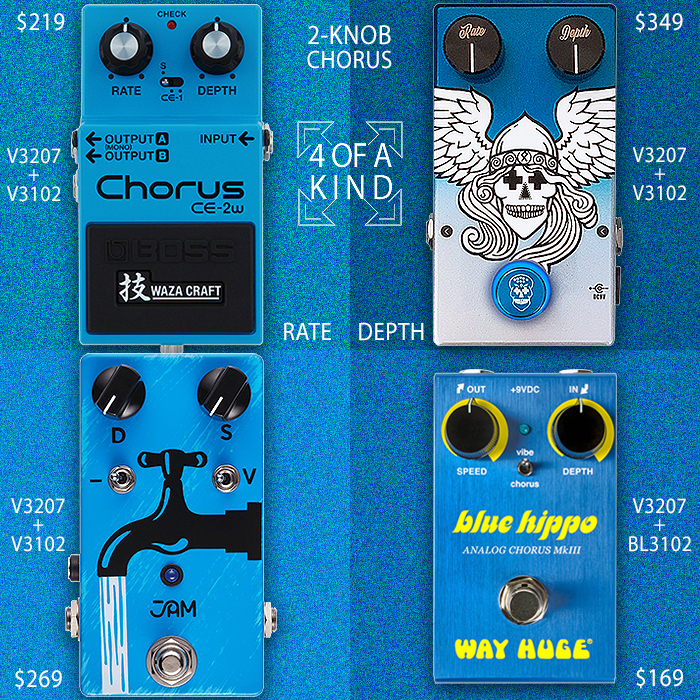
- MN3207 - Boss BF-2, Boss DC-2
- RD5106 - Reissued Deluxe Electric Mistress
- SAD1024A - ADA Flanger, Boss BF-1, EHX Electric Mistress Flanger, EHX Deluxe Electric Mistress Flanger, EHX Memory Man Delay, EHX Deluxe Memory Man, EHX Small Clone, MXR M-118 Analog Delay, MXR M-134 Stereo Chorus
- V3207 - Most current CE-2 style / vintage choruses, including Boss CE-2W [CoolAudio]
NOT USING BBDs
- Boss DM-1 - CCD : Charge-Coupled Device [an earlier technology]
PastFX Key BBD Applications - Mostly Matsushita
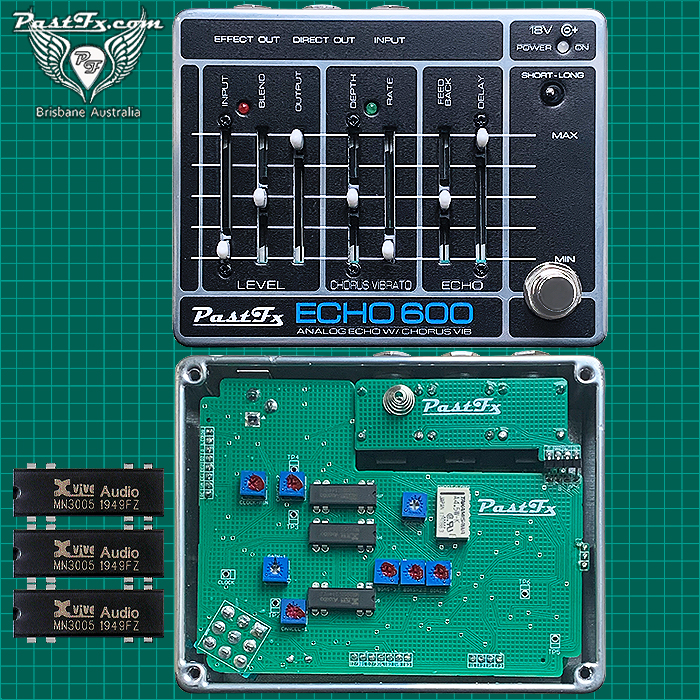
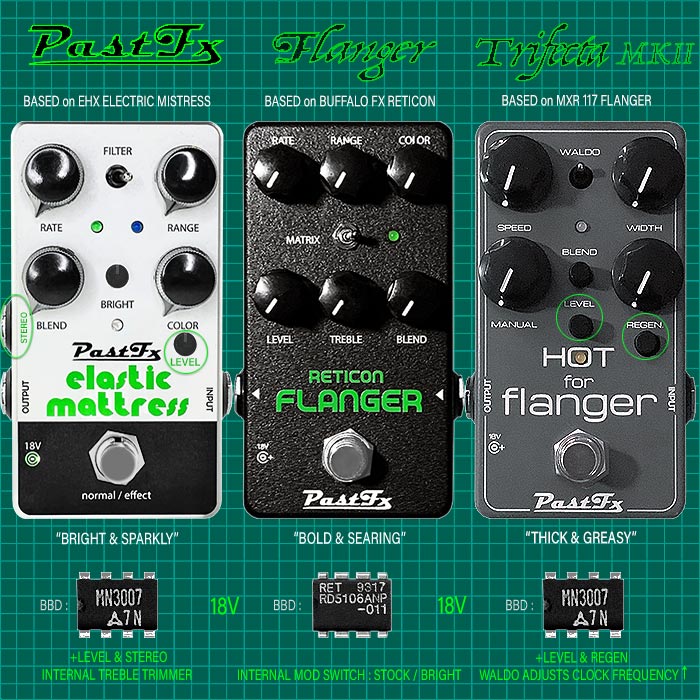
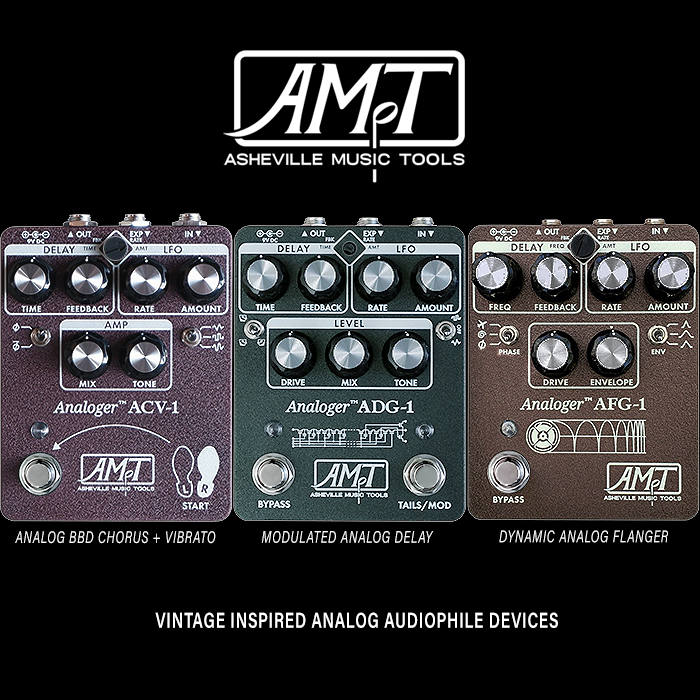
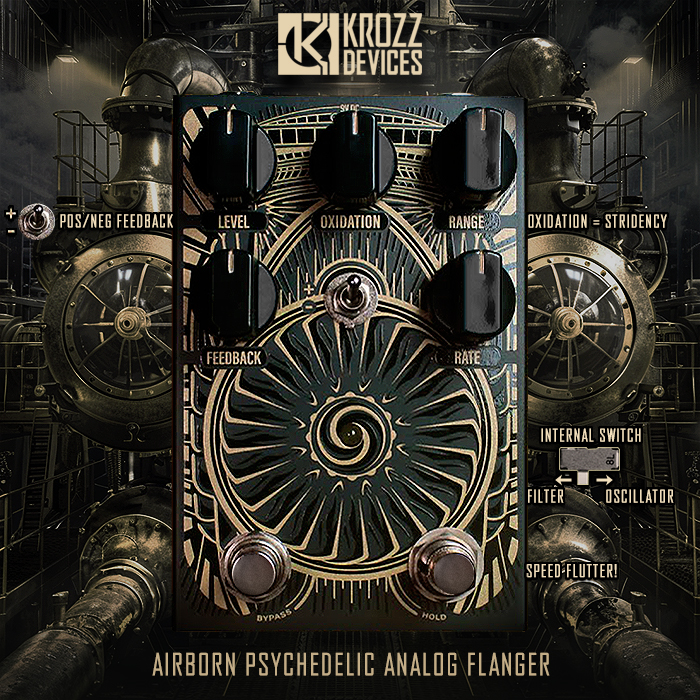
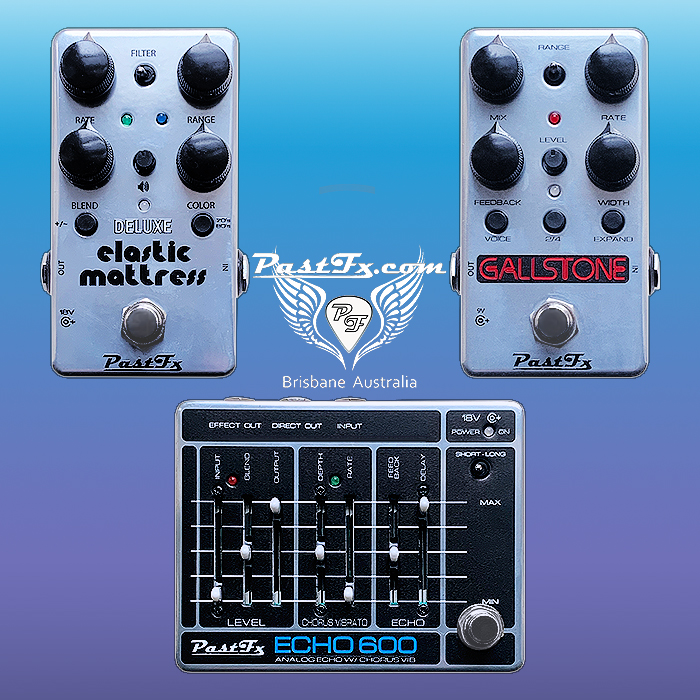
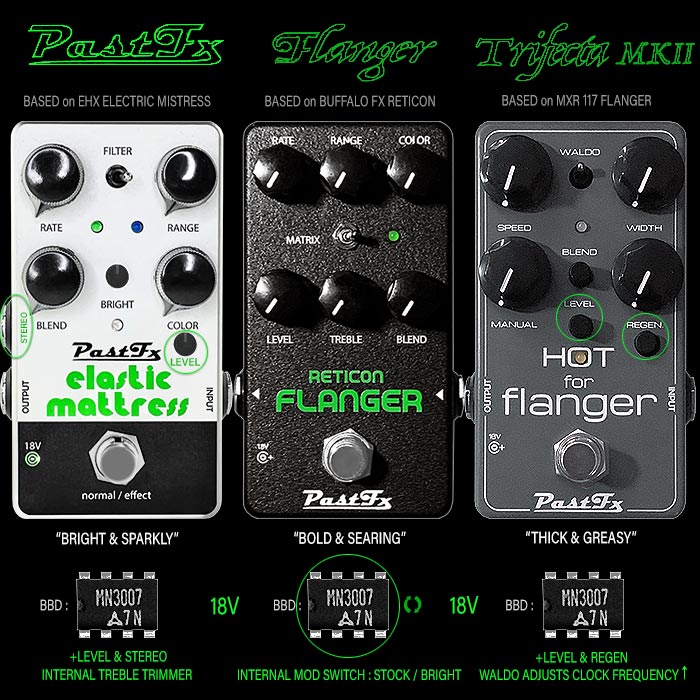
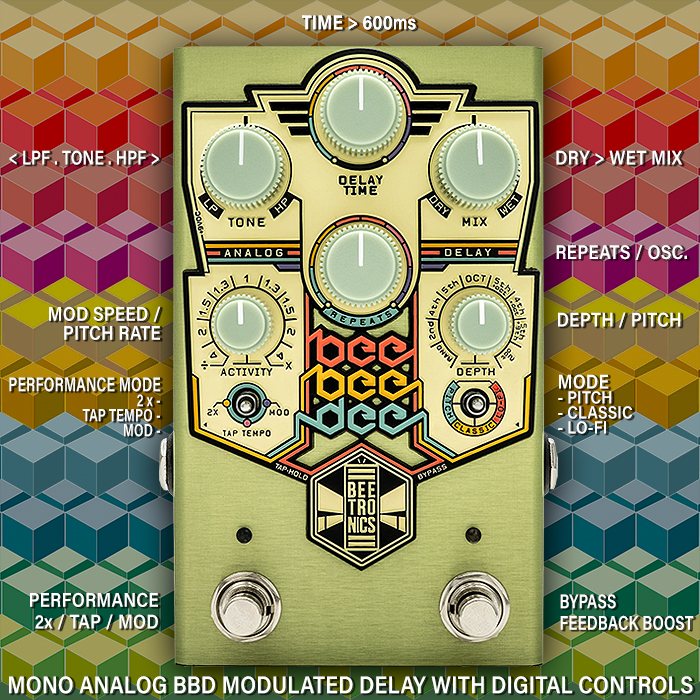
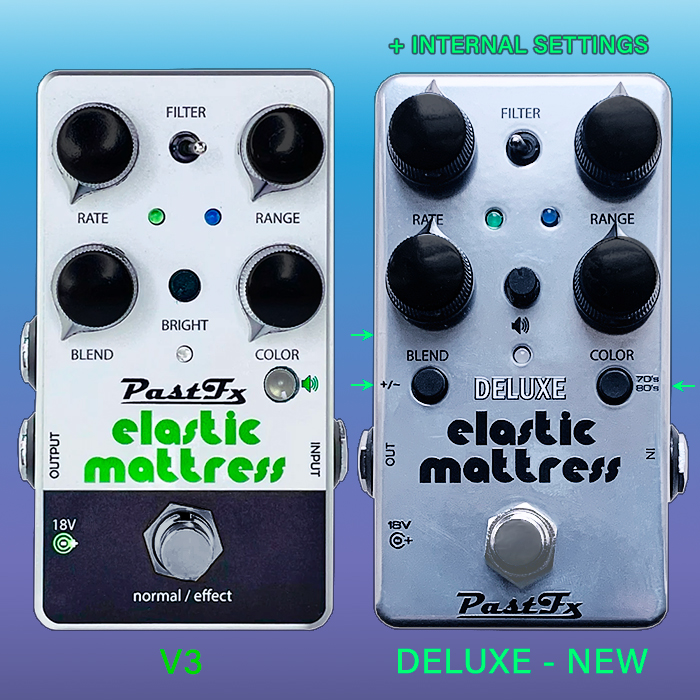
My most significant exposure to BBD Bucket Brigade Devices - has been courtesy of my many PastFX Vintage Modulations - Choruses and Flanges, as well as the recent 3 x MN3005 Echo 600 Delay - as sort of expanded Deluxe Memory Man - as pictured above.
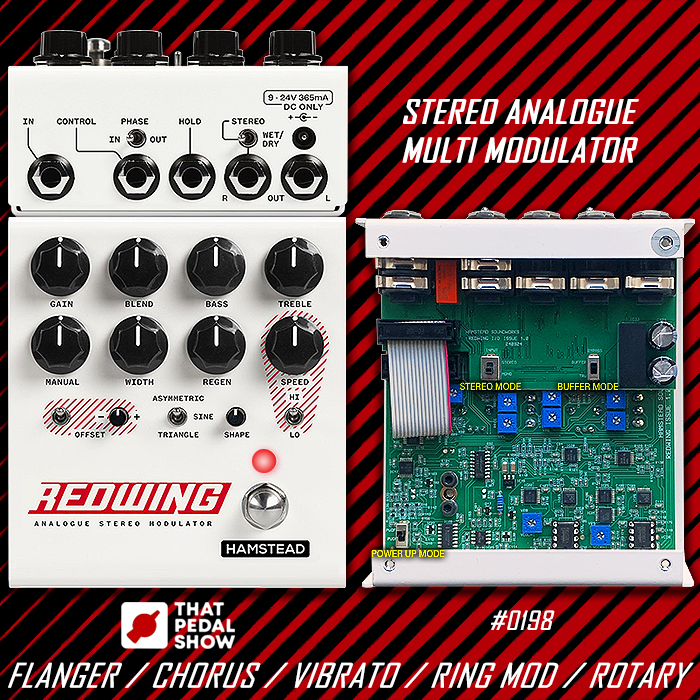
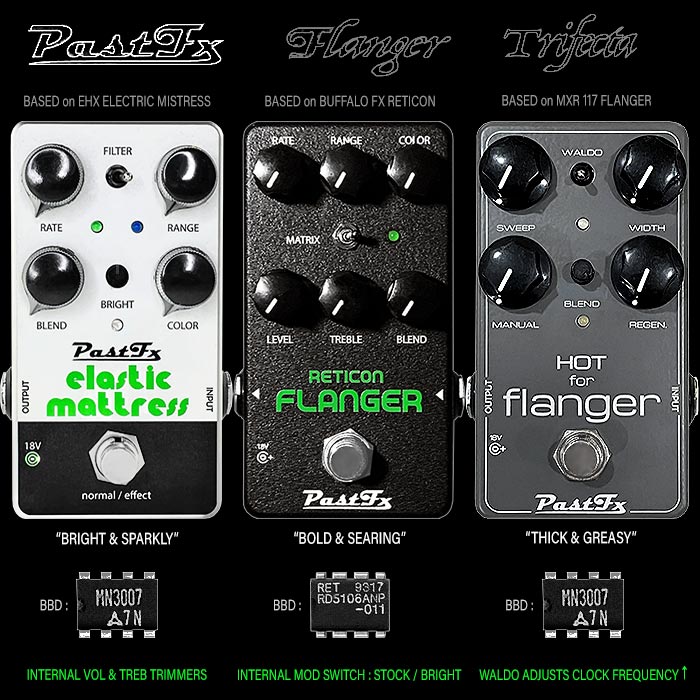
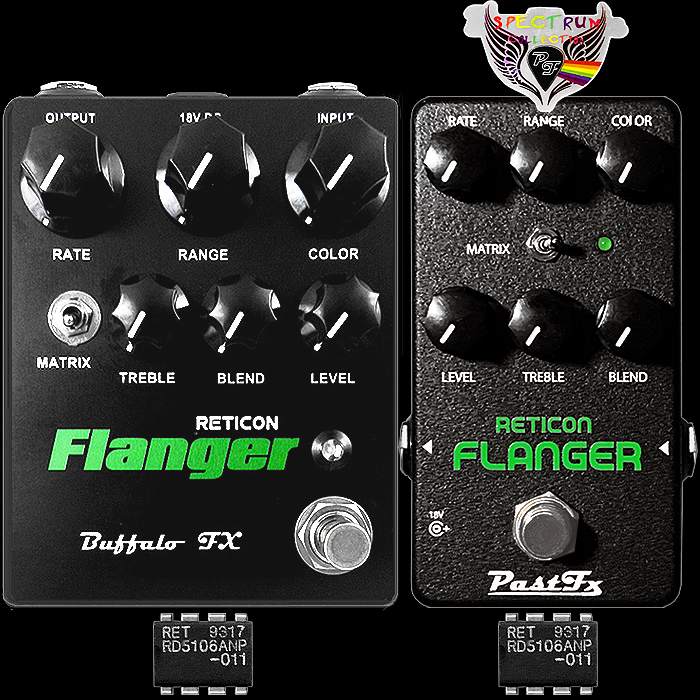
Two of my PastFX Flangers feature incredibly rare BBDs, in fact until the recent use of those excellent Xvive MN3005 - all the BBD's have mostly been Matsushita / Panasonic NOS Vintage Types - where I have just the one Rexticon Device - using he RD5106.
I feel certain that there has been a SAD1024 loaded limited device - that I missed out on - but am unable to find that reference now..
All those Modulations in particular are imbued with that lush vintage mojo that the best of those devices seem to have in spades!
I also always waned a cool take on the Deluxe Memory Man - in a more compact and potent package - and hat's exactly what the Echo 600. All my PastFX BBD Devices retain top tier status - each one is absolutely killer - from my first Compact CE-1 -style Chorus Ensemble Mini through to the recently reviewed Echo 600 - all of those featured here are exceptional.
PastFX tends to heavily lean into the charms of the MN3007 BBD - and it's a match made in heaven pretty much!
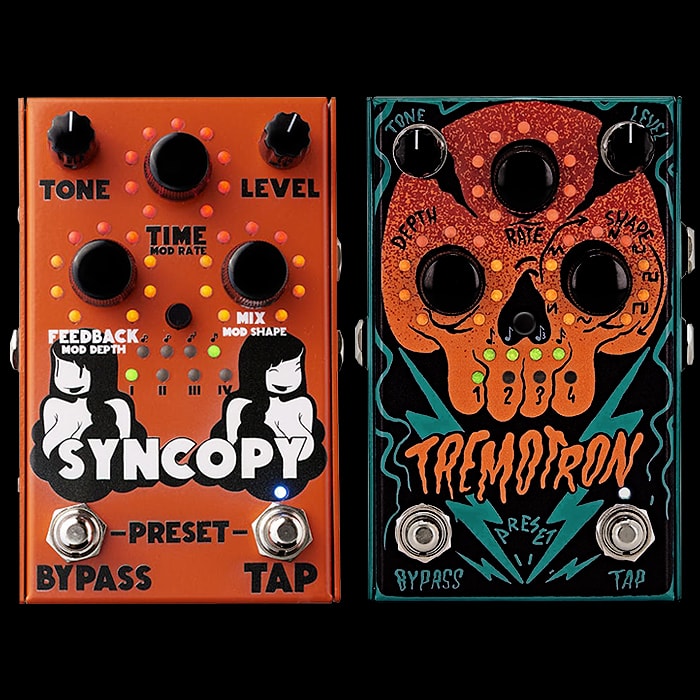
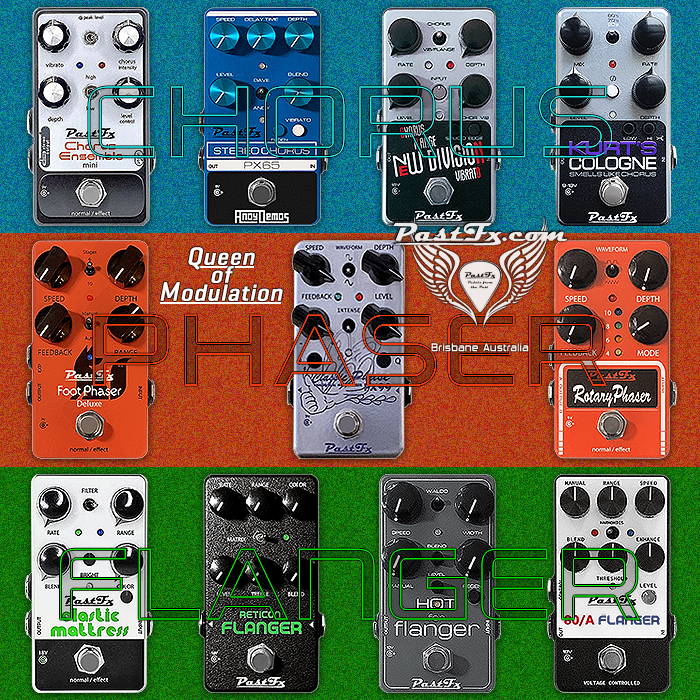
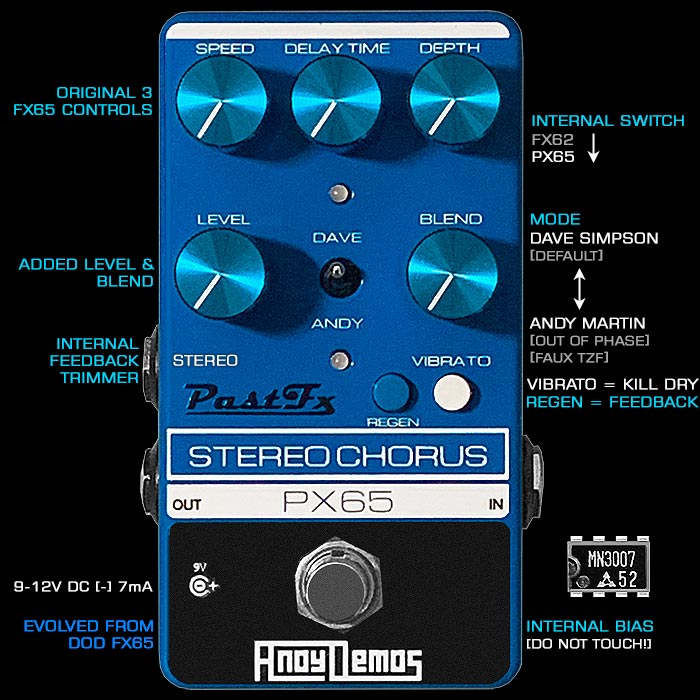
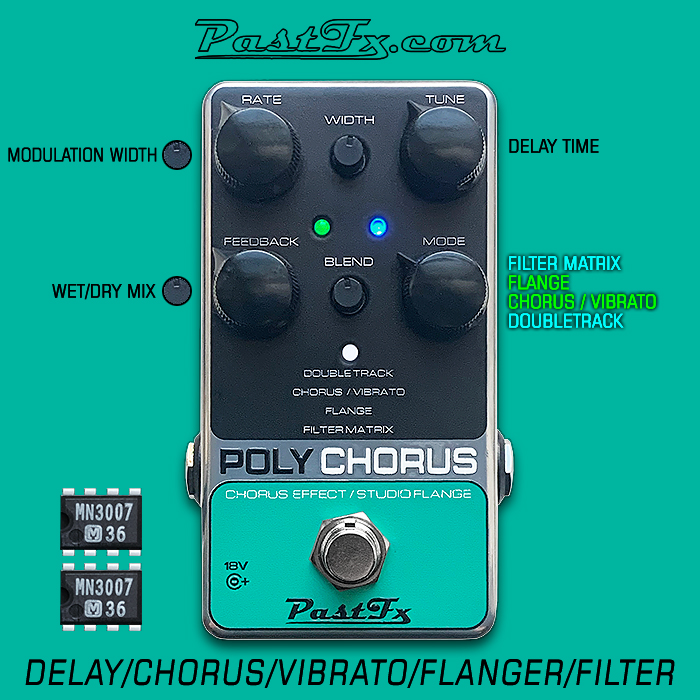
These are in my personal reference collection of PastFX Devices (modulation are pictured below!) :
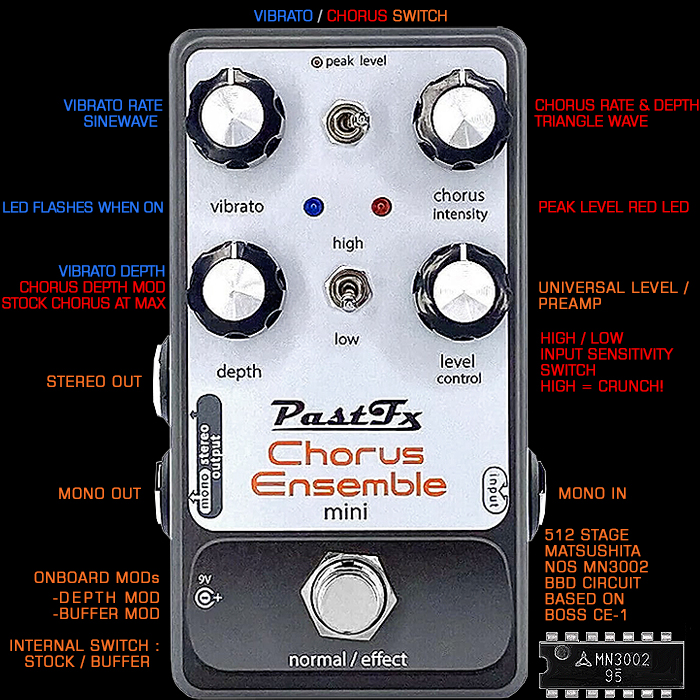
- MN3002 - Chorus Ensemble Mini
- MN3005 - Echo 600 [Xvive]
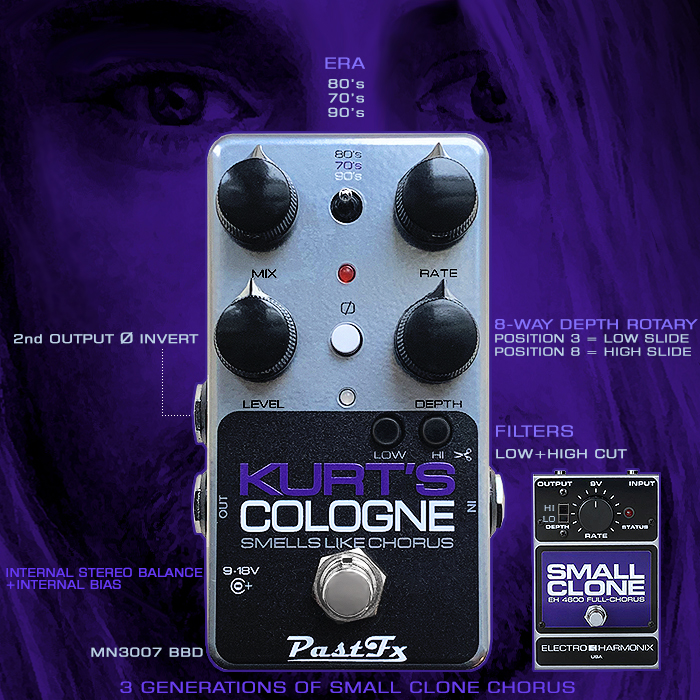
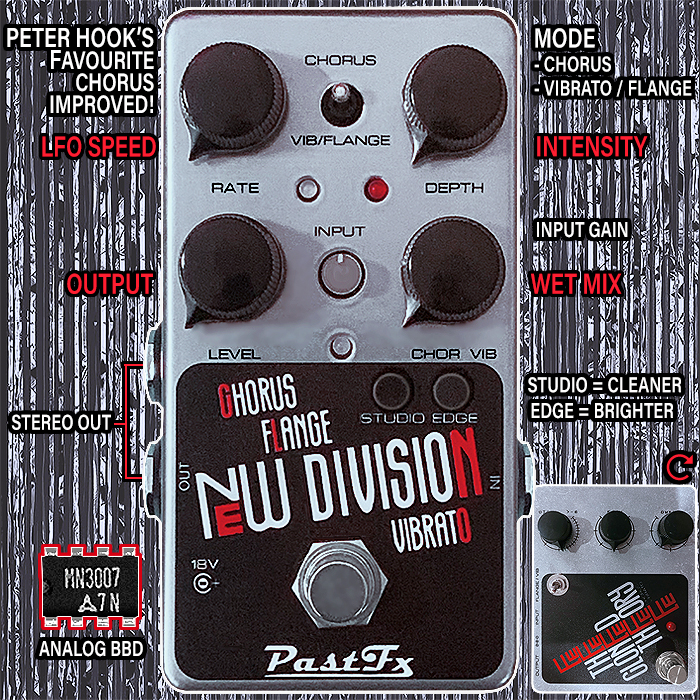
- MN3007 - Deluxe Elastic Mattress Flanger, Elastic Mattress Flanger, Hot for Flanger, Kurt's Cologne Chorus, New Division Chorus/Flange, PX65 Stereo Chorus
- MN3010 - 80/A Flanger
- RD5106 - Early Reticon Flanger [Reticon]
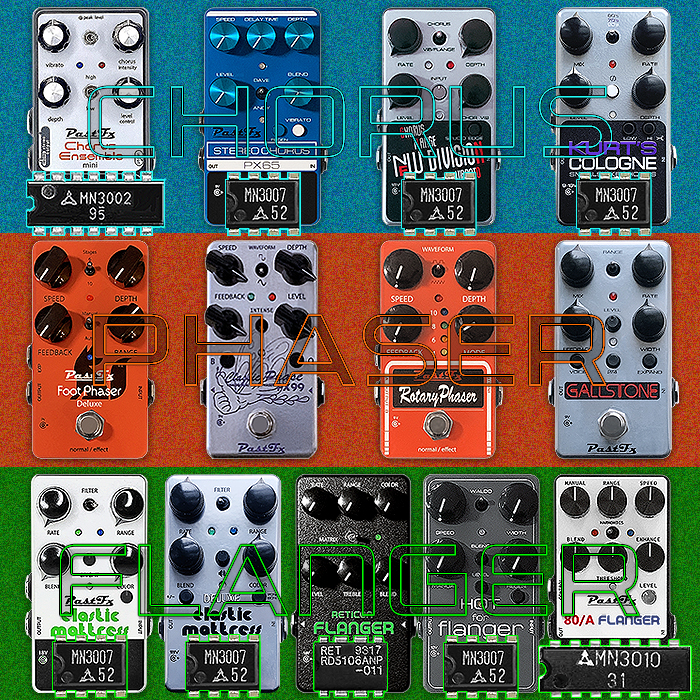





Content Subscriptions