

Xploration • Curation • Recommendation


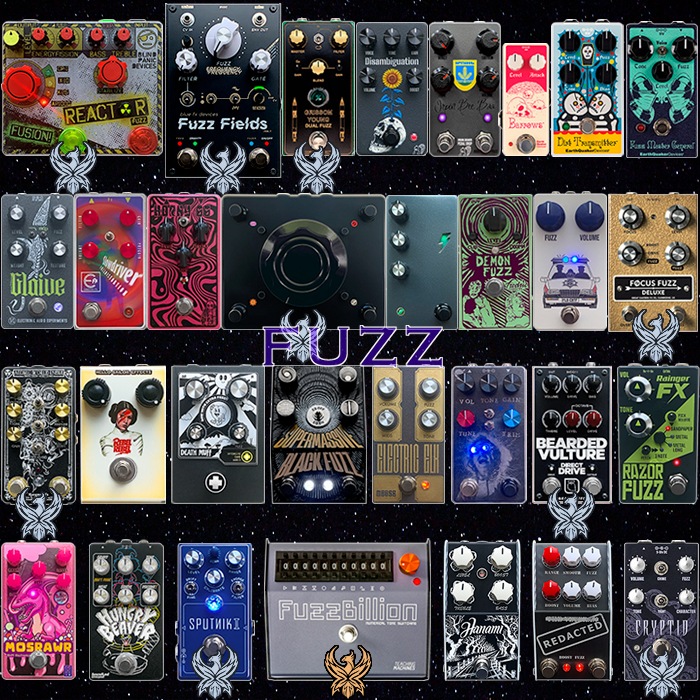
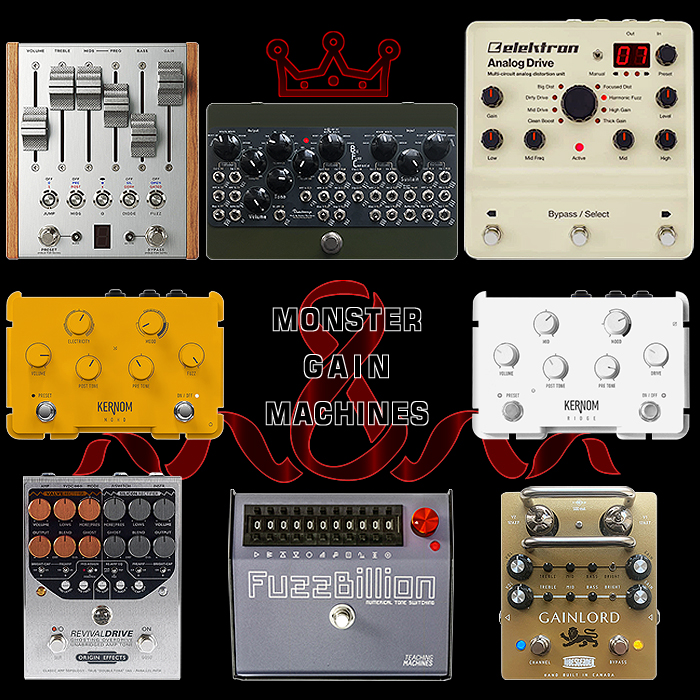
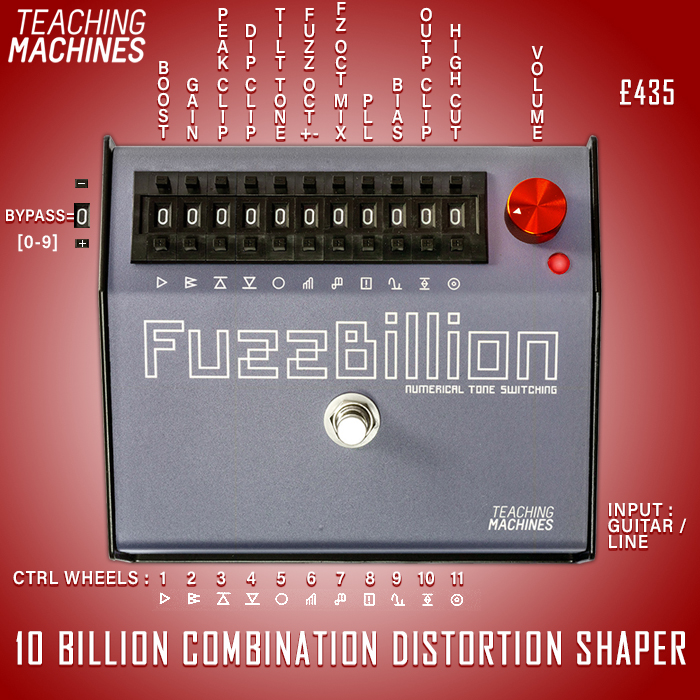
The Magnificent Teaching Machines' FuzzBillion is one of my all-time favourite pedals - its combination wheel gain-shaping delivers myriad exceptional tones across the gain spectrum


I have spent a week now with the magnificent analog mechanical marvel that is FuzzBillion - and I’ve been utterly dazzled by its brilliance. This pedal is genuinely extraordinarily high fidelity and is a superb enclosed breadboarding device and analog sound-design machine.
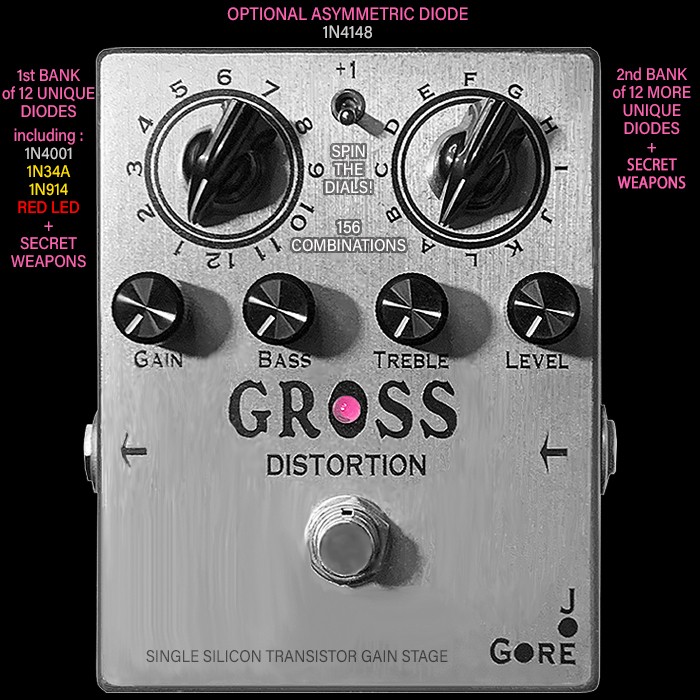
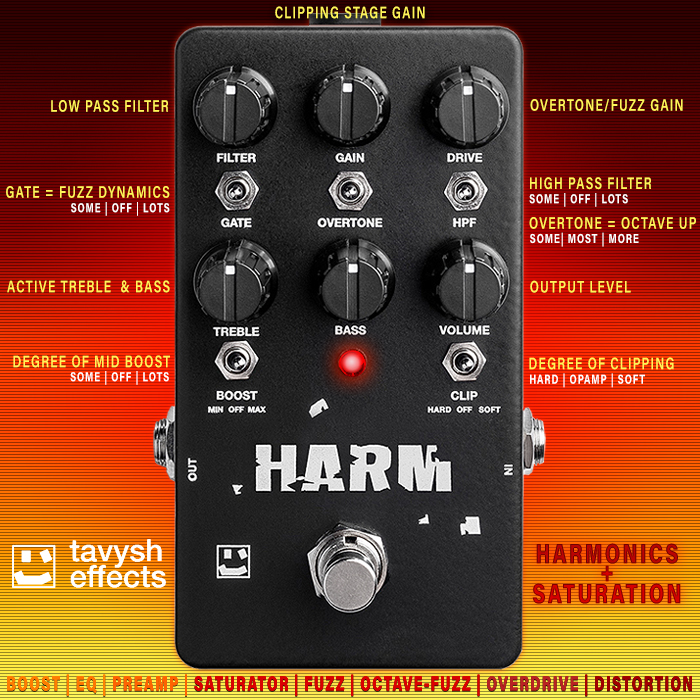
Leon and his colleagues at Teaching Machines (+ Frank, Luke, and Mat) recommend you work left to right - and start off every sound design task - with all wheels at zero - and then mix your favourite sound cocktail from there. Elements of this are reminiscent of my Joe Gore Gross Distortion - and the Tavysh Harm - Harmonising Multi-Gain pedal - where you build up different gain structures in a somewhat more elementary way than the FuzzBillion with its myriad possibilities.
The FuzzBillion is a Multi-Gain pedal as far as I’m concerned - delivering all manner of varieties of gain output - from clean to textured boost, through overdrive, distortion, and various styles of fuzz.
I always try to mix up my core elements first - which normally involve Wheels 1 & 2, and whichever core elements you’re wanting to shape from - where the main food groups are Boost, Overdrive, Octave Fuzz and PLL Harmonising Fuzz.
The most difficult of those to dial in is the PLL which can be quite unruly on several settings - as you need to set up the supporting cast at around the same time - while as for some settings you don’t necessarily have to stick to the left-to-right strictures - but it’s a sound way to work - as there are several challenged later on if you try to skip over certain settings and wheels - they’re kind of on the circuit path!
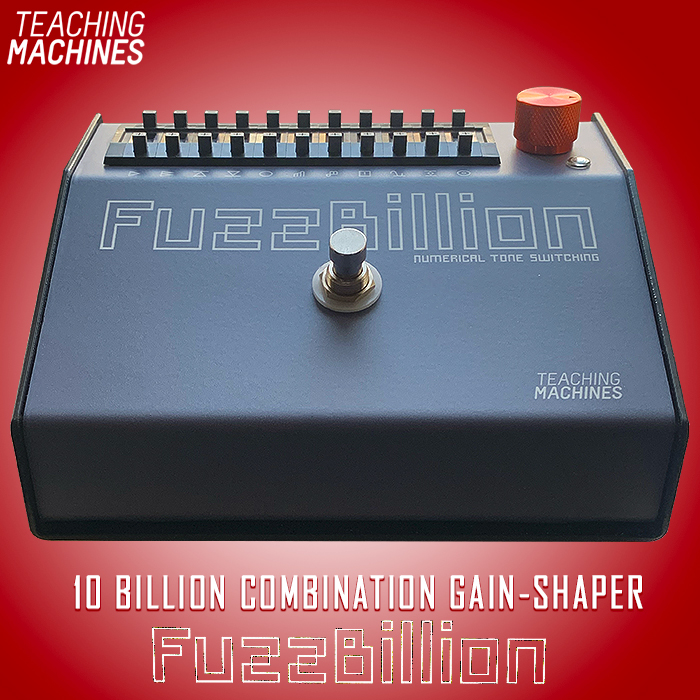
For me Wheels 1 & 2 are the VIPs - alongside the Tone and Overdrive Elements - I mostly tend to use a soupçon of each of those.
Where the 3 clipping wheels are really supporting cast - but each can massively impact the gain structure and core nature / timbre / texture of the output.
I tend to handle the 3 Diode wheels within the same phase - and then I fine-tune everything else.
This Analog Mechanical Marvel really comes into its own during the fine-tuning phase - which is a little like a visit to the opticians - where you’re determining whether the next Lens is better / sharper or worse for you than the last. The same is true of the FuzzBillion - where you spend a lot of time auditioning / trialling and erroring each Component Wheel for your chosen tone - deciding which elements improve, and which diminish or are too much!
There’s a wide variety to tackle across the various wheels - and you never need to use all of them - often adding a certain element diminishes your chosen tonality in a certain way - and you then find yourself dialling things back to a preferred state!
Generally though you tend to sort of serendipitously feel your way forward to a killer tone - and by the 4th or 5th go - you will have sort of figured out how various elements impact. In fact you often have to re-tune when auditioning and adding certain elements into the mix - adding more gain and tweaking the Tone typically. You can see below that for most of my preferred tones / settomhs I did not need the last wo or few wheels, and indeed for my Saturating Distortion Tone - I didn’t need the last 5 wheels - so just use what you need - as with all art - you can overdo things too - so you need to know when to stop tweaking, and when to wind back recent changes!
The Core FuzzBillion Pedal Function
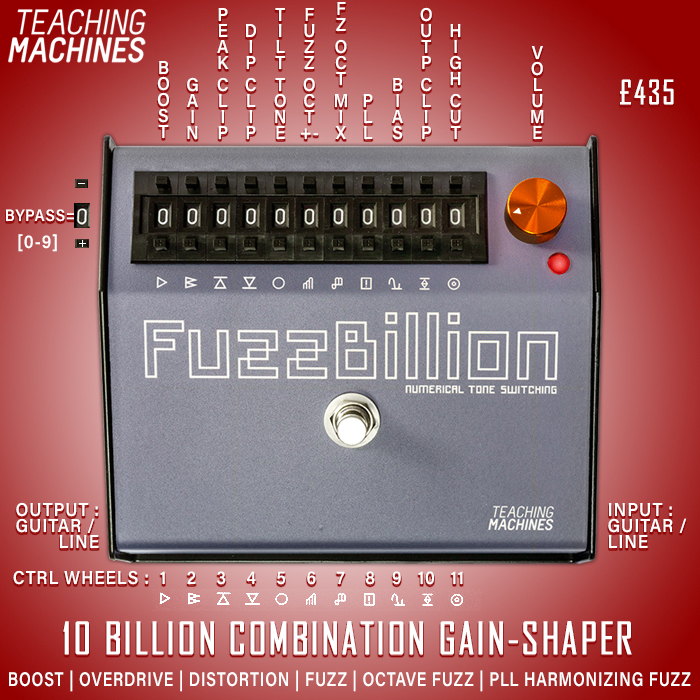
We actually have a very straightforward linear control topology - consisting of [+] and [-] buttons / plungers which advance the wheels forward or back - one click at a time. Through a very satisfactory mechanical functionality. The only knob is the output volume - which I like to ride quite high - but arches unity for most voicings just the other site of noon.
It's an incredibly satisfying device to operate - where the complexity is in the vast array of components covered, but the core mechanic is as simple as it comes - and with no need, or access even to micro-tuning / safecracker manipulation of the dials! :
Controls - Input : Line Level / Guitar Level, Components Wheels #1-#11 - each with options numbered 0-9: #1 Boost| #2 Opamp Gain | #3 Waveform Peak Diode Clipping | #4 Waveform Dip Diode Clipping | #5 Tone : Bass > Treble | #6 Octave Fuzz Drive | #7 Octave Fuzz Intensity | #8 PLL Harmonizing Fuzz | #9 Negative > Positive Bias | #10 Output Diode Clpping | #11 Output Treble-Cut, Volume Kmob, Output : Line Level / Guitar Level,
Ports - TS In, 9V DC [-] 30mA, TS Out. - note that I measured Current Draw - which seemed to idle at 12-14mA, but when active rarely went above even 20mA - so you don't need any kind of potent power supply to power this pedal.
The Core Mechanicals! [Wheels Intro]
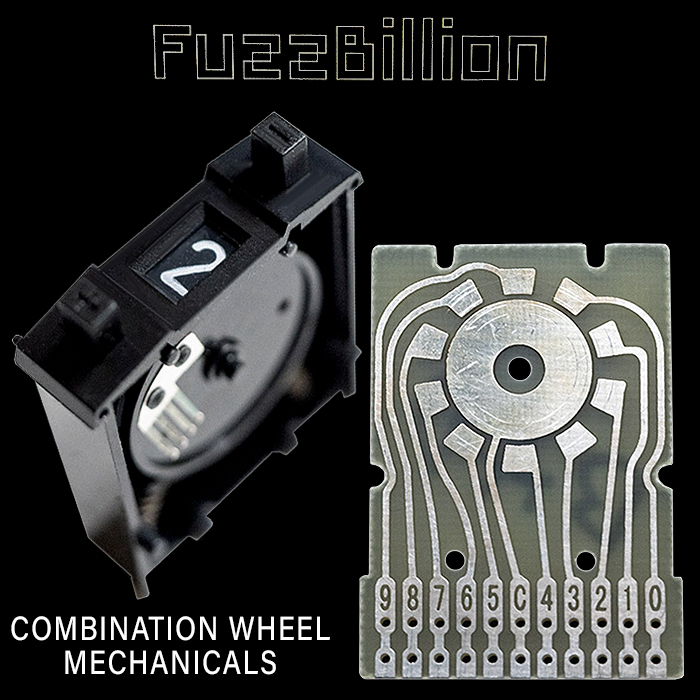
Anyone who has every used a combination lock - will know the core workings of this devices - while those Wheels are variously connected / wired to component selections (Diodes and Capacitors mostly) as well as to certain potentiometers - where you access different part of the control taper for that cicuti component - like say the main Opamp! You can see one of the Combination Wheels above - and the accompanying circuit track which is regulating 9 different component selections or gain and level ranges.
It's just a matter of using hose small push-buttons / mechanical plungers to rotate those wheels forward and back.
The 11 Component Wheels
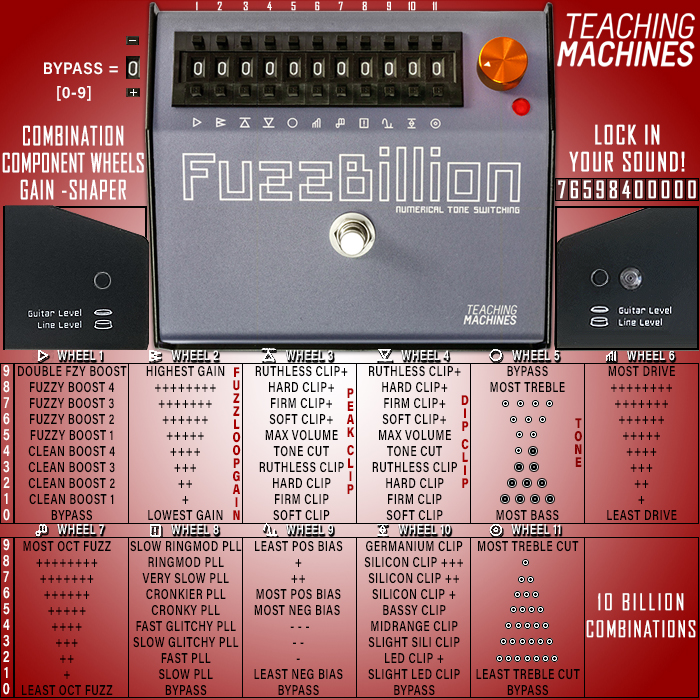
Wheel #1 : Clean Opamp and Fuzzy Transistor Boost
- 0 : is Bypass
- 1-4 : is incremental Clean Opamp Boost
- 5-8 : is incremental Fuzzy Single Mis-Biased Transistor Boost
- 9 : is Double Fuzzy Transistor Boost
I like maximum harmonics in my chosen tones - and mostly use the Fuzzy Boost therefore as a core foundational element!
Wheel #2 : Fuzz Loop Gain
- 0 : Minimum Gain
- 1-8 : Incremental Gain
- 9 : Max Gain
This alongside Wheel #1 forms the core foundation or 'bed' for most of my FuzzBillion Tone Generation. Those two combined are my MVP's!
Wheel #3 : Waveform Peak / Upper-Half Diode Clipping
- 0 : Germanium Diode - relatively soft-clipping
- 1 : Silicon 1N60P Diode - louder and harsher - firm clip
- 2 : Silicon 1N4148 Diode - higher voltage and sharper - hard clip
- 3 : LED Diodes - harder clipping with more sustain - ruthless clip
- 4 : Capacitor in feedback loop - cuts treble a touch - more so on wheel 4 - Tone Cut
- 5 : No Clipping - core Opamp only - Max Volume
- 6-9 : Similar to 0-4, same types - but More of each - Soft+, Firm+, Hard+, and Ruthless+
The manual advices talking Wheels 2-4 together, while I typically tackle Wheel #2 with #1, and then tackle all the Clipping Diodes in the same phase - which mean Wheels #3 & #4, and Output Clipping on Wheel #10. Those Diodes can massively shape your output - deliver more harmonics - more volume, brightness, sharpness or softness. They are an essential tone component- and I find myself regularly scanning through all the options - just to see which ones combine the best for my chosen voicing!
Wheel #4 : Waveform Dip / Lower-Half Diode Clipping
- 0 : Germanium Diode - relatively soft-clipping
- 1 : Silicon 1N60P Diode - louder and harsher - firm clip
- 2 : Silicon 1N4148 Diode - higher voltage and sharper - hard clip
- 3 : LED Diodes - harder clipping with more sustain - ruthless clip
- 4 : Capacitor in feedback loop - cuts treble a touch - more so on wheel 4 - Tone Cut
- 5 : No Clipping - core Opamp only - Max Volume
- 6-9 : Similar to 0-4, same types - but More of each - Soft+, Firm+, Hard+, and Ruthless*
This Wheel is very much optioned with Wheels #4 & #10 - I often find myself seeing how each of those settings impacts on the output texture. Those different Diode options are a major part of the output character shaping of this pedal!
Wheel #5 : Tone / Tilt EQ
- 0 : Most Bass
- 1-4 : Decreasing Bass
- 4-7 : Incremental Treble
- 8 : Most Treble
- 9 : Tone Bypass
I'm mostly on Max Treble [8] or Tone Bypass [9] - but it very much depends on the core nature of your chosen / desired tone, There's an odd pleasure in Adding Max Treble, and then Cutting it back a touch with the final Output Treble-Cut on Wheel #11
Wheel #6 : Drive - core components of Octave Fuzz
- 0 : Least Drive
- 1-8 : Incremental Drive
- 9 : Most Drive
This is supposedly only audible if Octave Fuzz Intensity is above '0' on Wheel #7. Evidently I had a sort of Placebo Effect when dialling in my Sustaining Distortion Setting - it somehow seemed to sound better with that wheel involved - to such an extent that I have it on either 4 or 5 on most setting where that Wheel should only be working fully for my Octave Fuzz Preset! I just move those combinations around until I lock in the best sound - and that's the preset I save and dial in a second time!
Wheel #7 : Octave Fuzz Intensity
- 0 : Least Octave Fuzz
- 1-8 : Incremental Octave Fuzz Intensity
- 9 : Most Octave Fuzz
As mentioned - this one normally needs to be at 1 or above for Wheel #6 to be audible - while I could have sworn I got marginally better result for some voicings - even without this wheel being at a significant level to impact proceedings. Possibly just placebo!
Wheel #8 : PLL Phase Locked Loop Fuzz-Harmonizer
- 0 : Bypass
- 1 : Slow PLL
- 2 : Fast PLL
- 3 : Slow Glitchy PLL
- 4 : Fast Glitchy PLL
- 5 : Cronky PLL
- 6 : Cronkier PLL
- 7 : Very Slow PLL
- 8 : Ring Modulation PLL
- 9 : Slow Ring Modulation PLL
The PLL element can be incredibly wayward and flighty - particularly the earlier options - where I mostly live around the more predictable 6-9. Cronky and Cronkier are pretty fun too - but you get a volume drop - and need to increase the output!
The PLL is the trickiest to set up - and requires a large supporting cast of at least the first 4 Wheels, plus the Octave Fuzz's Wheels #6 & #7. The routing of the core circuit means you need to use those bridging elements - and this one kind of proves the left-to-right workflow - as you get nothing with just Wheel #8, with #1 & #2. In fact I thought I had somehow mangled my pedal in that exploration for a brief moment - as it can sound very broken if you don't have the full supporting cast of key elements active!
Wheel #9 : Bias Offset for Fuzz Loop Gain
- 0 : Bypass
- 1-4 : Negative Bias
- 5 : Most Negative Bias
- 6 : Most Positive Bias
- 7-8 : Decreasing Positive Bias
- : Least Positive Bias
This setting moves the Waveform Up and Down - where the extremities get clipped - and can sound quite chopped and nasty!
Wheel #10 : Output Diode Clipping - 2 x back-to-back Diodes
- 0 : Off / Bypassed
- 1 : Blue & Green LEDs - Slight LED Clipping
- 2 : Red LEDs - Harder LED Clipping
- 3 : 1N4148 Diodes - Slight Silicon Clipping
- 4 : 1N60P Diodes with 47N cap - Midrange Clip
- 5 : 1N60P Diodes with 1uf cap - Bassy Clip
- 6 : 1N60P Diodes with 1K resistor - Brighter, but quieter, with more sustain
- 7 : 1N4148 Diodes - Hard clip, Quiet
- 8 : 1N60P Diodes - Even more clip, Quieter
- 9 : Germanium Diodes - Most clip, Quietest, and most sustain
Diodes Wheel #10 is less essential for me - and frequently the output sounds better without it - while there is a lot of added texture here if you feel you need it - this Wheel is mostly Bypassed for me, and surplus to requirements - while it allows you to change things up further should you need / want to!
Wheel #11 : Output Treble-Cut
- 0 : Bypass
- 1 : Least Treble-Cut
- 2-8 : Incremental Treble-Cut
- 9 : Most Treble-Cut
Treble-Cut is surely an essential utility for Single Coils, but less used / needed for Humbuckers - I mostly had this Bypassed - did not feel the need to shave off any highs - output generally was quite balanced. This element is more for those unruly elements - when played through a Single-Coil Guitar!
General Wheel Operation!
This process is mostly likened to an Optician's Phoropter - where the patient is presented with different lens options - and they need to say if the current lens is sharper or blurrier than the previous! In the same way for the FuzzBillion - you're constantly sampling the different Tone- and Gain-Shaper Element on Offer. Auditioning, Slotting in and checking though the myriad different options - back and forth - to see which one sounds best to you!
As mentioned you do not need to use all the Wheels - while certain component elements have dependencies - including the Octave Fuzz and PLL Harmonising Fuzz. Over time you kind of get used to some of those options and how they impact - when it becomes more like a Cocktail Mixer - and you just need to mix together the appropriate ingredient elements in the appropriate strength / intensity.
It's actually pretty fun - and you should just let the FuzzBillion take you on a journey!
I would like to refer you to the Amazing Manual that accompanies this pedal - that is as excellent as the pedal itself - wile it does skimp on some details - like the nature of the first LED pairing and the actual Germanium Diodes types that are being used within this pedal - possibly to give Teaching Machine greater leverage in the future - when some of those components start to run dry!
The Presets
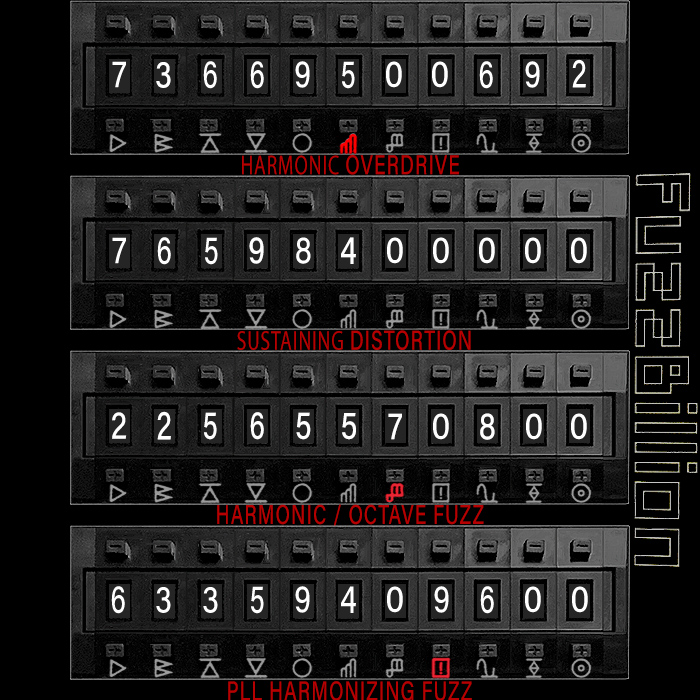
Of course the main mission here it to find all the very best tones that are contained within this pedal - and I set out to generate a wide palette of killer tones.
Where I first dialled in the Sustaining Distortion - that's my very first Preset attempt - before I then did the Octave Fuzz Preset, then the Harmonic Overdrive Preset, and finally my chosen PLL voicing - which sounds amazing too when you Bypass the PLL dial!
The FuzzBillion device is so much fun and so easy to use - that you could easily dial in a different Preset every day - for the rest of your life!
While I will probably continue to dial in a few more each week - and make note of the best of those!
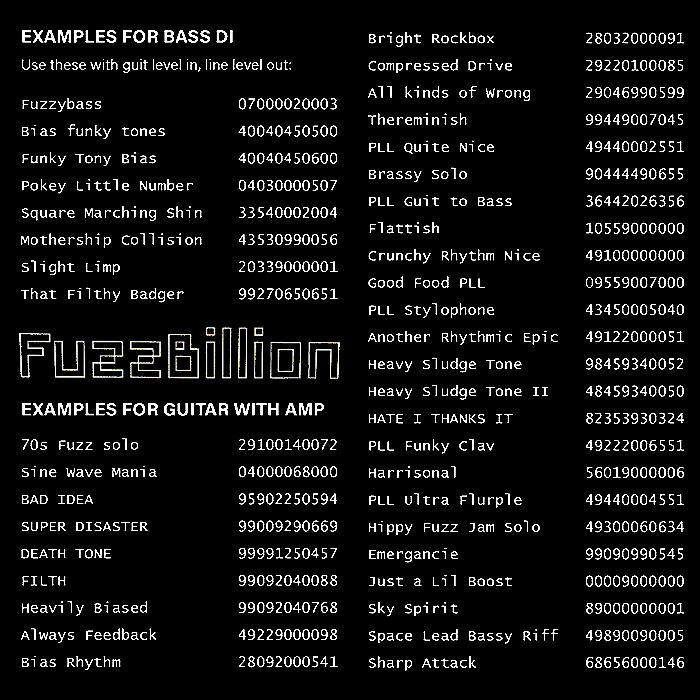
There's a cool reference within the manual - as below - which gives you a tonne of recommended Presets - in fact there whole manual is peppered with them! It's impossibly to get bored with this device - as there are so many options here - that combine in such brilliant ways!
Final Thoughts
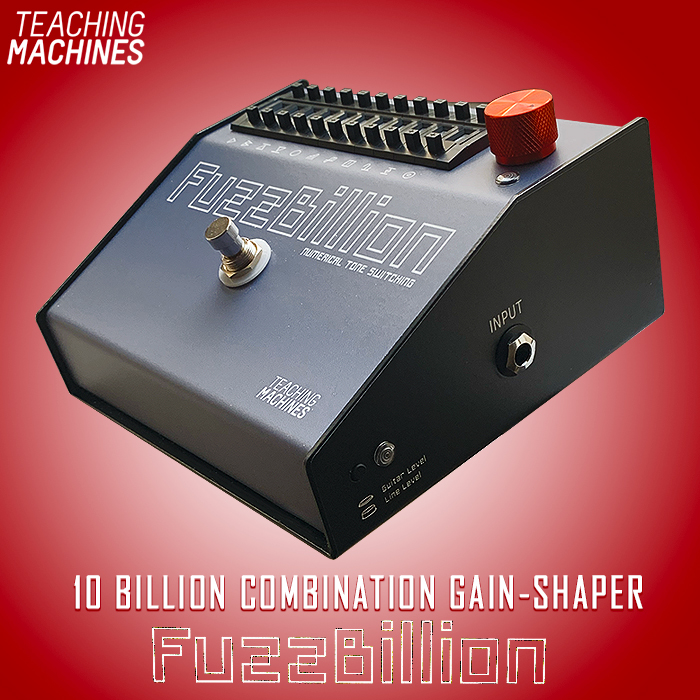
I absolutely love this device - and have done so from first encounter. Everything clicks into place very reassuringly and there's Plenty of Everyting on tap - including Volume and Gain of course!
Truly this is a most magnificent Analog Sound Designer and Tonal Cocktail Mixer - with a vast Component Array - to deliver Gain and Gain Structures through all the different Gears - where you can ramp up from a barely there boost, to fuzzy boost, smooth overdrive, textured harmonic overdrive, various flavours of Distortion - including Sludge and High Gain, and then all manner of different fuzzes - by mixing up Wheels #6-#8 and with those various clipping and textural options.
This is the most reassuringly heavy pedal I own - it's build quality, concept and execution are all Top Tier / Special Tier rather. This device really deserves to come top in all the end of year polls!
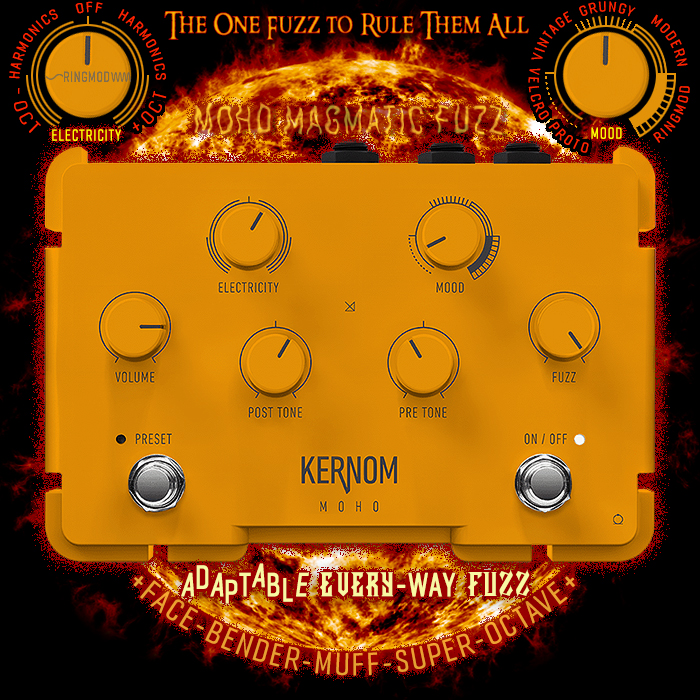
It reminds me of using my Tavysh Harm and Kernom Moho pedals in particular - where each control impacts on the final output - even tiny degrees / increments. While on the FuzzBillion those are whole steps - there is no Safe-Cracker micro-movement technique required - these are all hard and fixed intervals - with marvellous mechanical precision like the fit and fixtures on German luxury saloons.
This FuzzBillion is an eternal Pandora's box of delights - and great tones - this one is such a joy to deploy!
I tend to ride the Volume pretty high - but there's always more combinations for more output!
I find myself sometimes counting in the Wheels from the margins - as I'm still locking in all those symbols! - it should all lock into place -and be second nature eventually for sure.
If you love all types of gain - this one has you covered for nearly every eventuality. It's not really for the fire and forget brigade - but rather for the 'New Preset Every Day' heroes!
I would still like to see a numerical legend for the different Wheel Numbers - that makes it easier to navigate into the appropriate wheel - while I'm starting to get used to those symbols by now!
I would still add a numerical scale - and also a Master Reset Switch / Plunger - which turns all the dials back to Zero. You get the funcion on similar counter devices - like they use for large gigs and nighclubs to regulate venue traffic. Teaching Machines and Grindle just ned to figure out how to do that for this device.
Engineering and Sound Design -wise - this can only ever be referenced as 'That Magnificent Combination Machine'
Props to everyone involved - inducing the Teaching Machine Staff (Frank, Mat, Leon, and Luke) and my good friend Grindle - the Manual is also as exceptional as the device - just top top product development - there's nothing else like this! Long may the FuzzBillion reign!
It is a little on the large side - but not overly so, and yes reassuringly heavy, and somewhat reassuringly expensive - this is the equivalent of your Track-Day Sportscar! It's £435 + Vat + at least £10 Delivery Charge - for a somewhat eye-watering at least £532 for UK Buyers - courtesy of the Teaching Machines Webstore (Shipping costs higher for far flung destinations) - still entirely worth it though. There's nothing remotely like it out there - and with all the R&D that's gone into its creation - it should probably go for even more.
A seriously gorgeous and glorious - truly magnificent piece of kit all-round!
Demos





Content Subscriptions