

Xploration • Curation • Recommendation


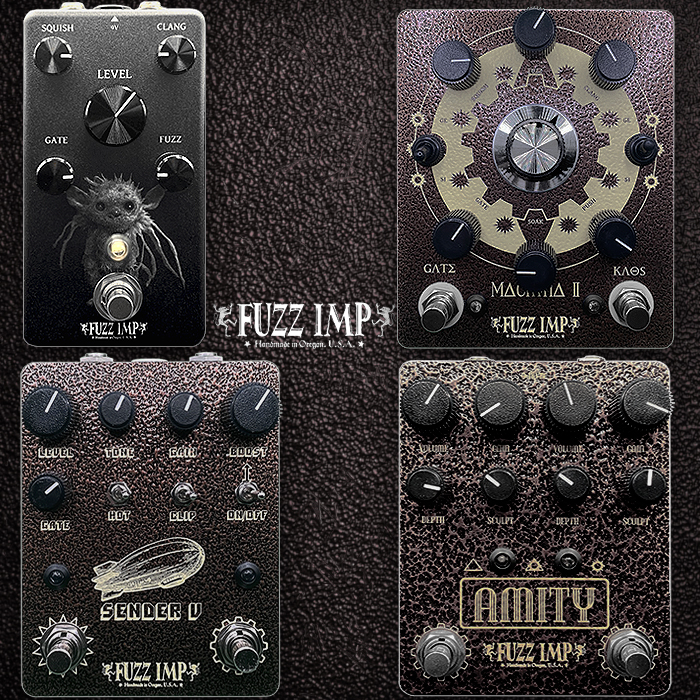
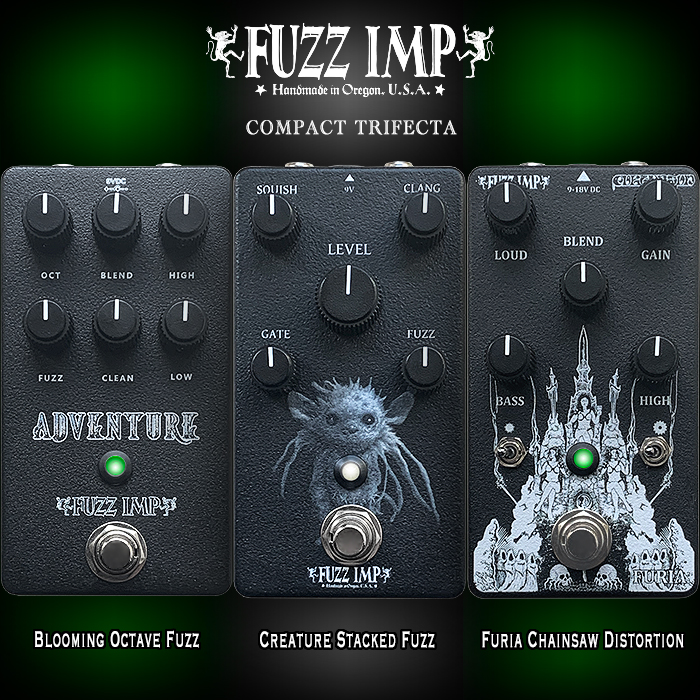
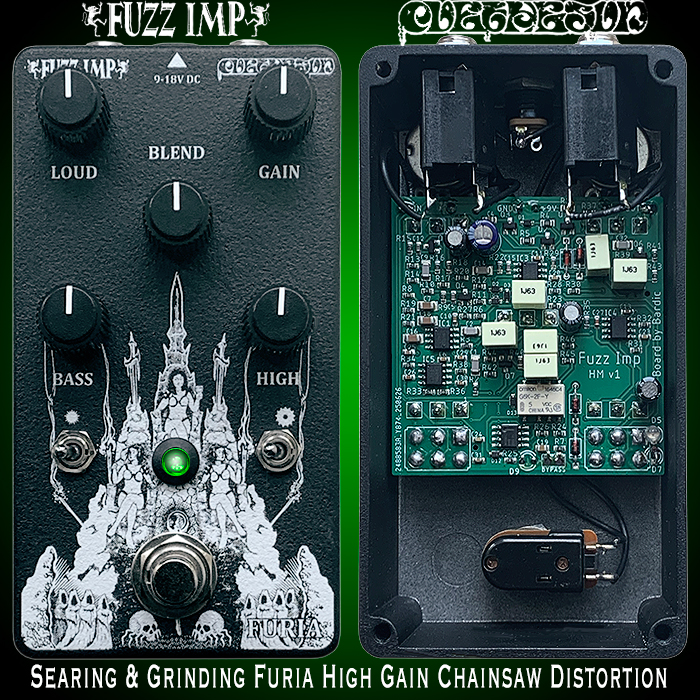
The Fuzz Imp Creature beautifully combines Percolator and Factory Fuzz Circuits in Series - for a vast range of conventional and unusual textures and tones


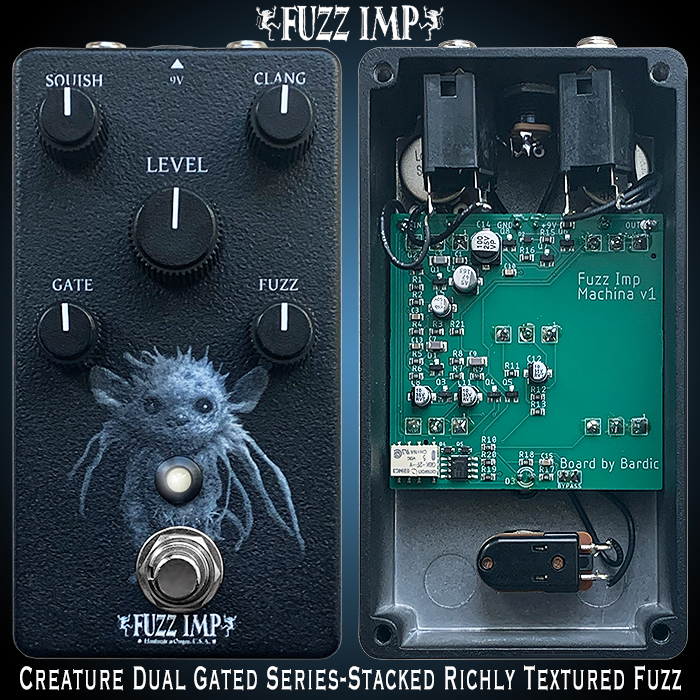
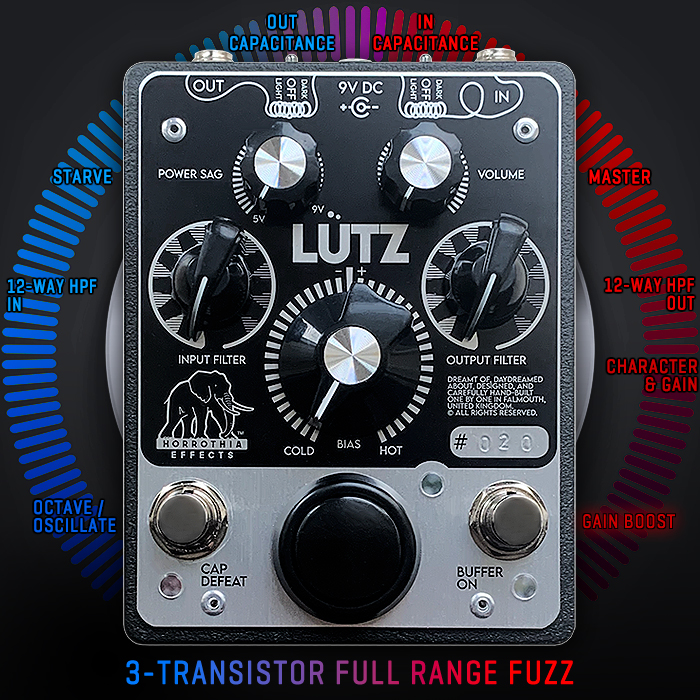
For this particular article it probably makes sense to first check out my second visual below - which explains most of the technicalities of this pedals - which has a very unusual control topology to match its rarified construction.
You can see from the Transistors references that the first two are for the Percolator circuit - Q1 & Q2, we then have the Q3 Buffer that boosts into the Factory Fuzz circuit to overcome the typical impedance issues for said 2nd Fuzz circuit. And then the Factory Fuzz circuit utilises the Q4 and Q5 Transistors - which the 2 left-hand Bias knobs (Squish & Gate) have domain over. Those Biases induce natural gating as you crank them up - which is pretty much a requirement - as this is a very easy circuit to get into feedback squeal. It’s mostly about balancing Fuzz 1 (Clang) with Fuzz 2 (Fuzz) - and then you temper the output with the two biases which are active even when the Fuzz 2 is dialled all the way back.
- Fuzz 1 = Harmonic Percolator
- Fuzz 2 = Fuzz Factory
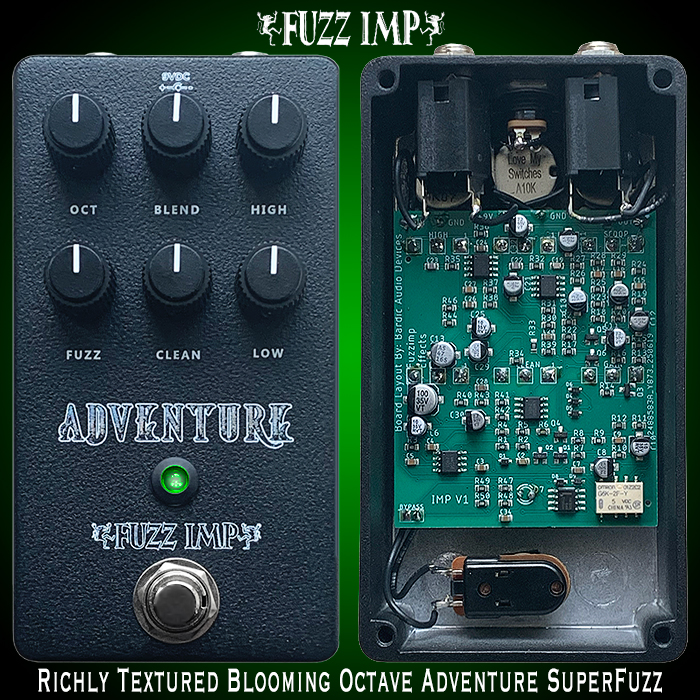
It’s not a dissimilar mechanic to that for the Adventure SuperFuzz - which actually mixes up 3 circuits - but that one seems somewhat easier to dial in and balance up appropriately. The Creature very much does its own thing here - and there’s a learning curve for getting a feel for the thresholds either side of which tones are musical or discordant. It delivers a richly textured fuzz output quite distinct from the Adventure SuperFuzz and in some ways not quite so rich - but it has its own advantages - and both Fuzz pedals are super versatile and big sounding. Dialling one or both fuzz voicing entirely down on the Creature tends to lead to feedback squeals typically - this can for sure be a very lively pedal! So in some ways you are forever endeavouring to tame and temper the excesses of this fuzz.
In most respects it is just as handy as the Adventure - but there are significant textural and behavioural differences - even though the ’balancing’ technique required for their dial-in is similar. For some reason I found the Adventure slightly easier to get to grips with. While once you’ve kind of mentally calibrated where the different Creature controls sit - you soon pick up the knack of getting the best out of that too. I was able to get marvellously rich and complex tones from both - where the Creature though made me work for it just a little bit harder.
Controls and Top Mounted Ports
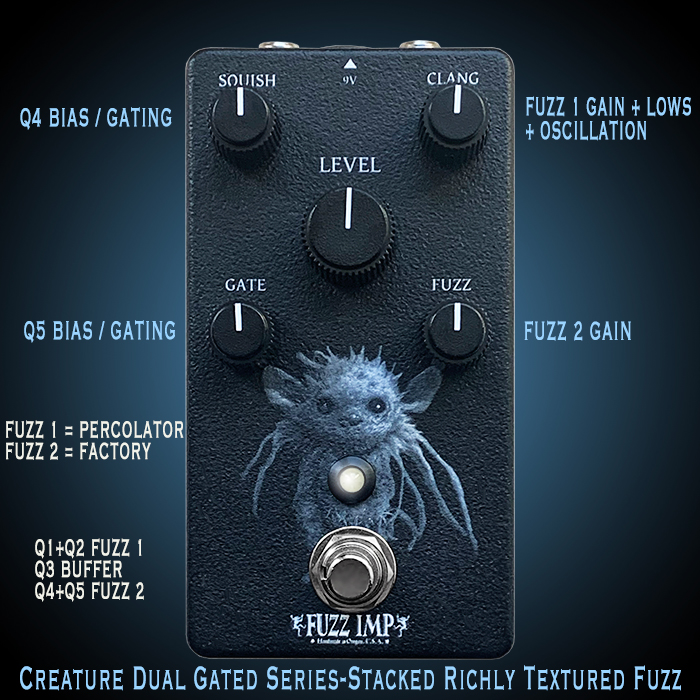
Controls - Squish (Q4 Bias / Gating), Gate (Q5 Bias / Gating), Level, Clang (Fuzz 1 Gain + Lows + Oscillation), Fuzz (Fuzz 2 Gain).
Ports - TS In, 9V DX [-] 35mA, TS Out.
As mentioned, dialling in the Creature requires a degree of patience and sensitivity - particularly if your 2 Biases aren't raised beyond the mid-way point. Depending on where your 2 Fuzz Gain pots are set - you will need to adjust the Biases / Gating appropriately.
Dialling both Fuzz Gain pots down leads to squeal, as does dialling the first Clang one down. So some degree of caution and diligence is required to get the best out of this pedal. And a little diligence goes a long way - and you can extract a huge variety of sounds out of this unique confection - from sort of Drive / Fuzzy-Drive at the lower end to various degrees of full and searing fuzz - not too far away from the textural complexity of the Adventure SuperFuzz. I like the two about equally - but I did find I got along with the Adventure a little more easily.
Justus's own demos are a fantastic reference for the different tones and textures available from the Creature. And with my article you get a feel for how the circuit works. Justus has obviously had sufficientnt experience of his circuit to get the very best out of it. Would be cool if we could have one extra switch - which allowed the circuits to be stacked in parallel as well as either-way series - that would for sure be a cool addition - which would though entail a little re-engineering.
Some of my favourite tones were achieved with Squish @ 10 o'c, Clang @ 10 o'c, Level @ 2 o'c, Gate @ 2 0'c, and Fuzz (2) @ 10 o'c - mostly those settings also with Gate @ 3 o'c, and Fuzz 2 @ 2 o'c sounds excellent. Generally if the 2 Gain dials are active in the left Hemisphere between 9 o'clock and Noon - you can afford to roll the Squish and Gate back a fair bit, while once either or both Fuzz Gains go significantly above Noon - you need to be more judicious with Squish and Gate. The optimal safe gain ranges for me were mostly between 8 o'c and Noon. Also the volume can be a little interactive with those controls also - so it's a matter of dialling it all in with a significant degree of sensitivity.
If you dial the Squish and Gate back too far - you will get drones and squeals fairly quickly. Generally the pedal works the most optimally with the two biases in the right hemisphere and the two Fuzz Gains in the left hemisphere of their knob rotations. I also typically prefer the Fuzz 2 Gain raised higher than the Clang Fuzz 1 Gain. Watch Justus's demos closely - and you should quickly figure out where to place those dials for what kind of sounds you like!
Both Fuzz Imp's Adventure SuperFuzz and Creature delver beautifully complex and textured fuzz outputs - and both are capable of exceptional tones. The overall appeal of the creature is probably higher, while the Adventure SuperFuzz is easier to live with - both are exceptional in how they operate and how they sound.
The price for the Creature is exactly the same as the Adventure SuperFuzz - at $149.99 on the Fuzz Imp Webstore. It's fantastic value for what you're getting. And I will leave it to you to decide which of the 2 has the higher appeal for your own preferences and sensibilities. I like them each for slightly different reasons - the Adventure was slightly more instant for me, while the Creature may well be more impactful over the longer term. I'm delighted to own both in any case.
Demos





Content Subscriptions