

Xploration • Curation • Recommendation


Hangman fx's Lord GermFet Germanium and JFET Channels Dual Overdrive is one of the most beautifully harmonically textured compact overdrives of that kind


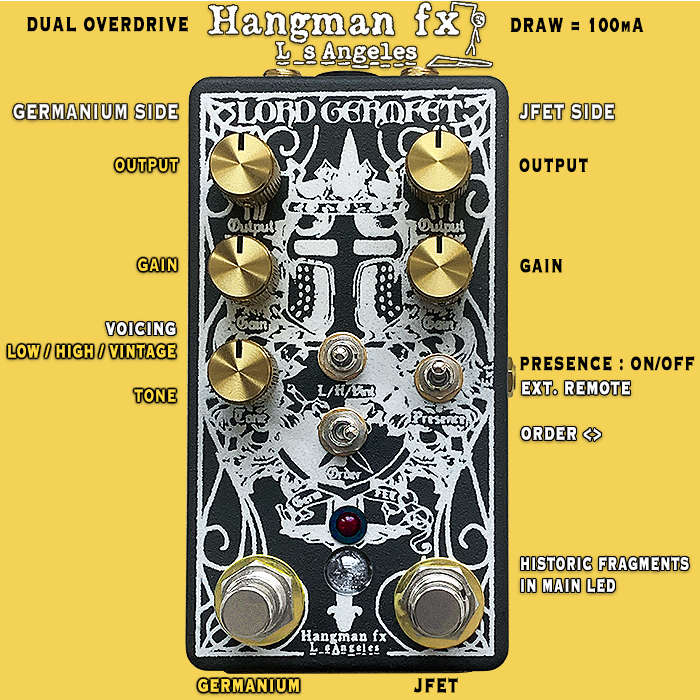
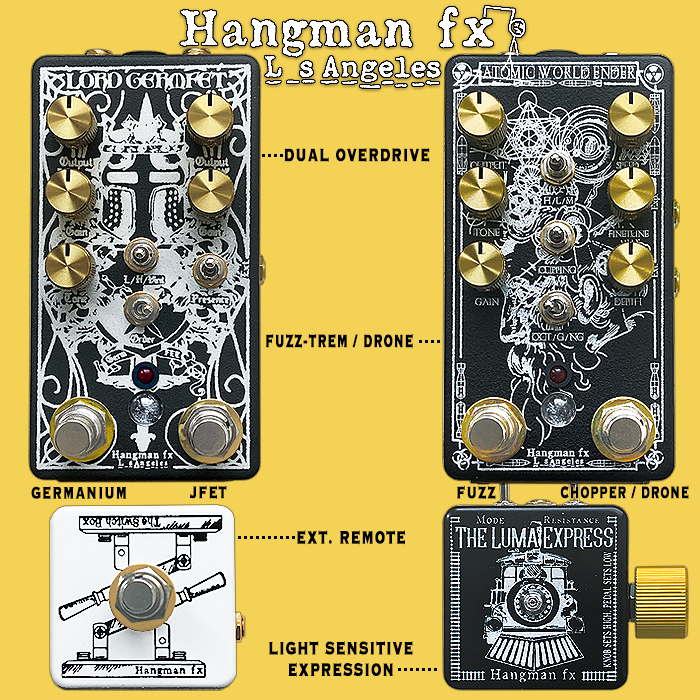
I first encountered Hangman fx in the Autumn of last year - where I was immediately smitten by the Lord GermFet Dual Overdrive. It has a 3 x NOS Germanium Transistor Left Channel (3 x Soviet MΠ21A) and a JFET Fetzer Tube Emulation Right Channel.
Left Germanium Side
- Output
- Gain
- Tone
- Voicing : Low / High / Vintage
- Left Germanium Channel Footswitch (lower white LED)
The Voicing toggle I originally thought was just about gain range - Low, High, Vintage - but it has an EQ component to it also - where the Low and High Modes are my favourites - I mostly operate on Low - as that delivers the best Low-end, the High option is slightly denser and more intense, with less Low-end, and the Vintage Voicing is rather more subtle really (lower gain) - and doesn’t quite deliver the full complement of harmonics which come through so well on the other 2 voicing modes. So I’m mostly on Low, sometimes on High, but rarely on the more subtle / lower gain Vintage mode!
The Germanium side is beautifully richly harmonically textured, but considering we have 3 x Soviet NOS Germanium Transistors - which is usually Tone Bender territory - where the output of this channel gets nowhere close to a Tone Bender per say - in terms of gain, sear and intensity - both channels really sit mostly within Medium Gain parameters - obviously you get quite a bit more when you combine the two channels - but they are fairly tempered in gain when deployed individually. Both sides deliver beautiful singing textures - obviously with more harmonic artefacts on the Germanium Side.
Right JFET Fetzer Tube Emulation Side
- Output
- Gain
- Presence : UP = Twangy / DOWN = Thick & Bold
- Right JFET Footswitch (upper red LED)
We also have an EXT. Remote port on the right side, and a central Germanium <> JFET order switch - where having the Germanium first gives you a more fuzzy / wiry output!
Favourite Settings : GERMANIUM } Output @ 12 o’c, Gain @ 2 o’c, Tone @ 1 o’c, Voicing : Low, ORDER : Germ First / JFET First, JFET } Output 2 o’c, Gain 2 o’c, Presence : Down.
The JFET Fetzer side is also full of flavour - but not nearly as textured as the Germanium Side - its output profile is also a touch quieter - which you can see from my preferred settings above. For the JFET side you need a little more on the Output side - to match the Germanium - but it’s close enough.
Both sides have very decent guitar volume gain cleanup - and great touch-sensitive dynamics - so you can really vary the output through your playing style and pick-attack.
This is an incredibly poised and well-balanced device - easy to dial in, and easy to achieve superior tones with.
It’s one of my favourite overdrives for sure - both sides are magnificent - and they combine amazingly - delivering articulate fuzzy-drive and upto proto-fuzz tones - can get to fairly searing, but never really up to Tone Bender levels of sear and gain.

In the first half we've covered how great this dual overdrive sounds - and how beautifully engineered and balancedhose two circuits are - also how well they combine. And here we will go more into the overall ownership experience - more from a functional and experiential perspective!
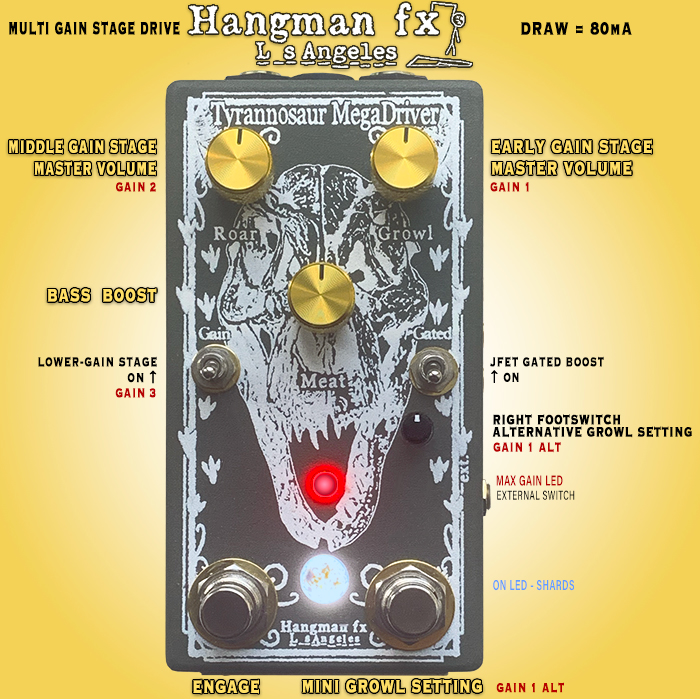
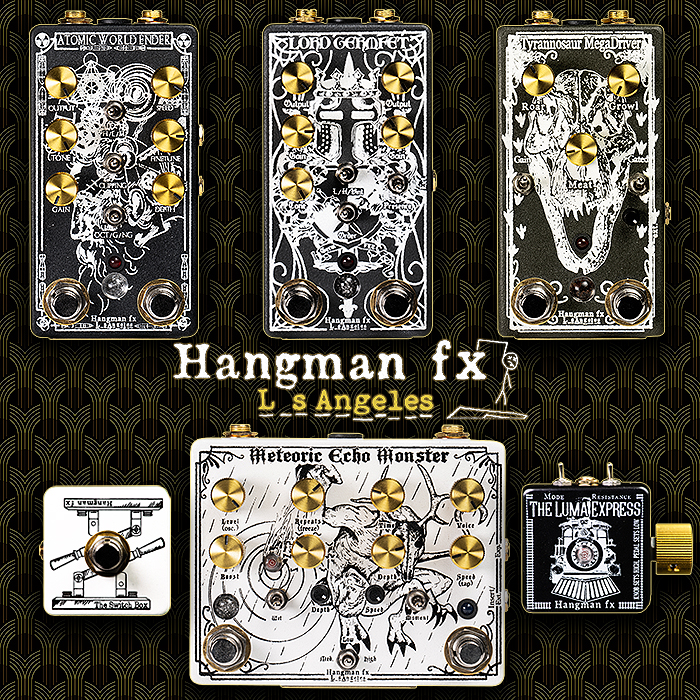
These are really beatifful looking pedals - with Black and White graphic artworks / enclosures - punctuated by elegant gold accents - Knobs, Washers and Ports - also a Gold Serial Number Plate on the front edge of the pedal. I tried to phorograph that - but said surface is so shiny and reflective that I could never do it justice - I evidently need a professional photographic studio with totally flat light to achieve that!
The experience starts wonderfully right form the unboxing - where there are tiny little hangman figurines taped to the inside top of the box lid. The pedals are surrounds by foam on all sides, and arrive in a sort elegantly stamped white muslin bag. The manuals are high-quality card based - and perfectly legible - albeit with somewhat small text - but they cover everything you need to know.
My only criticism really is the on-pedal labelling - which is nigh illegible within the complexity of those front panel artworks - you struggle to read them even at eye level - as they almost blend into their surrounding - and from a standing height they are rendered wholly invisible. That's my only mini gripe - which doesn't really impact the use of this pedal as it's so straight-forward - while with all the additoainl settings on the Atomic World Ender - it would really help if you could read those options - as they are just a little too many to 100% recall - in amongst all your other pedals. I have several possible remedies for that - if Paul is interested in hearing my opinion - while it's a tiny tiny thing really and not at all substantive within the overall ownership experience.
When I first deployed this - the Switch Box was applied to the EXT. Remote Port - but I never really felt I needed it. I've very much been using Chase Blss pedals right from the start - and am well accustomed to having dual footswitches fairly close together - It's actually more of a preference for me - so in most circumstance I don't really need the Switch Box - I moved it on to the Atomic World Ender - and that's where it's stayed - while again it's not getting too much use. It's a wonderful thing to have - but it's really mostly for the journeymen giving players who have complicated boards - and need easy access to the second footswitch. For how I mostly operate the Switch Box is mostly surplus to requirements - while I'm sure I will find a more permanent use for it soon.
As to the Lord GermFet experience - apart from mistaking the order of the Germanium Gain and Tone knobs momentarily - it's really been plain sailing right from the start.
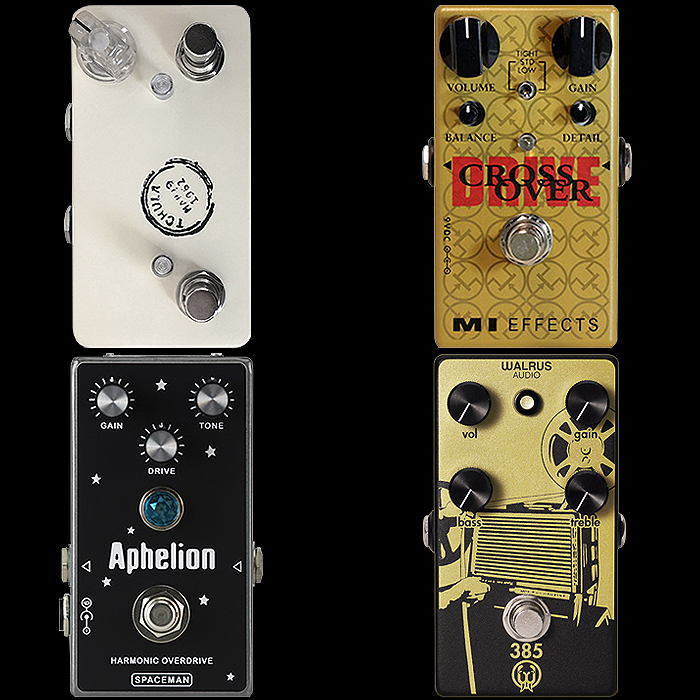
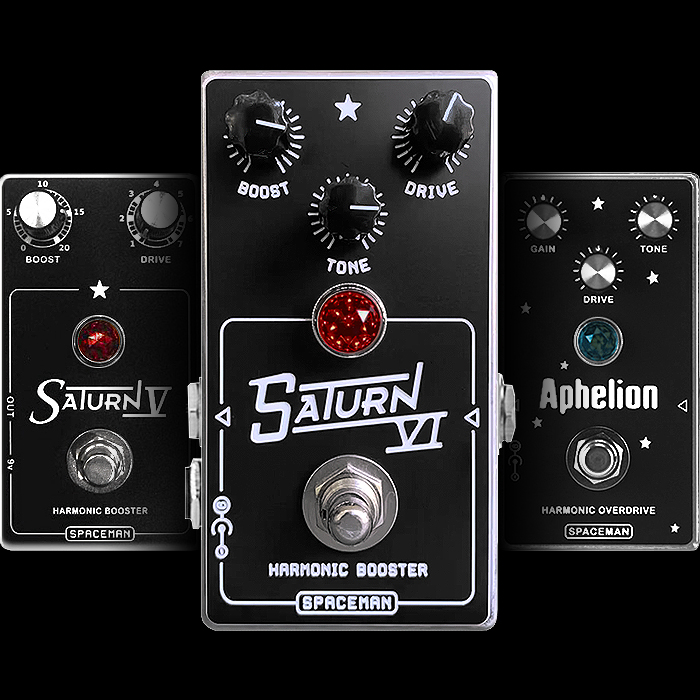
I'm a huge fan of Harmonic Overdrives - which often have Germanium in the Mix - either Transistors or Diodes - they always sound wonderfully richly harmonically detailed. This includes pedals like the Spaceman Aphelion, Bogner Wessex, Cusack Music Project 34 Selenium, Greer Amps Soutland, Vick Audio Lotus 2K, Free The Tone Sov-2, and Menatone Simplex to name but a few. The Lord GermFet is right up their with the very best of those - it's a little early to declare it my favourite Harmonic Overdrive of all time - that's usually the Spaceman Aphelion, while the combined might of the Lord GermFet will most likely claim the top spot before long - it really is that good.
For everything you're getting - the $240 price tag on the Hangman fx Webstore seems very reasonable indeed - particularly when you factor in every attention to detail and every aspect of the ownership experience. I really liked these pedals when I first saw and heard the demos - since I've acquired them and gotten full hands-on I really love every part of this experience (bar the tiny niggle with the legibility of function labels). Customers in North America can by drive from the Hangman fx website, while the overseas customers will need to contact Paul direct - via his instagram page - like I did - www.instagram.com/hangmanfx/ .
These are everyday wonderful and wonder-fuelled devices - heavily and heartily recommended!
Demos





Content Subscriptions