

Xploration • Curation • Recommendation


Dazatronyx's Darren creates the ultimate Multi-Muff pedal with his killer comprehensive breadboarding style Big Fuzz Console


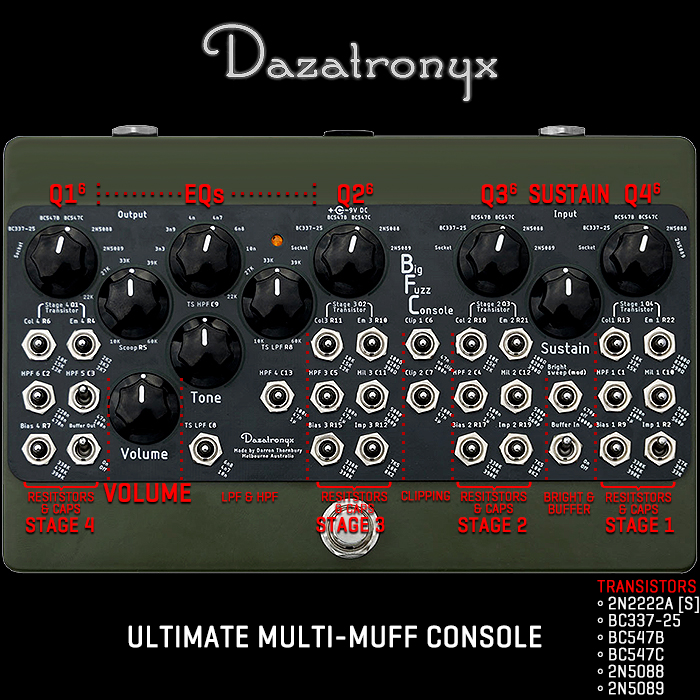
You should recall I was very keen on the Teaching Machines FuzzBillion last year and made that my Pedal of the Year 2025. Where this Big Fuzz Console is already a hot favourite for that honour this year!
It is based on Darren’s Big Muff breadboarding circuit - that he uses to develop his various Big Muff variants - where he can experiment with different component values - in pursuit of the perfect output for that style.
He’s formalised and refined his development circuit - to form this killer Big Fuzz Console Multi-Muff Pedal.
I’ve broken it down in this article into its 7 key elements, which I determine as follows :
- Stage 1 Q4
- Sustain, Bright Sweep & Buffer
- Stage 2 Q3
- Clip 1 & Clip 2
- Stage 3 Q2
- EQ’s & Volume
- Stage 4 Q1
The 4 x Gain Stages each have a 6-way Transistor Selector, with 6 Accompanying Resistor and Capacitor 3-Way Switches - so you can select different combinations to generate your own perfect tonality.
The Big Fuzz Console is $499 direct from the Dazatronyx Webstore. Considering what you’re getting - it’s actually really good value!
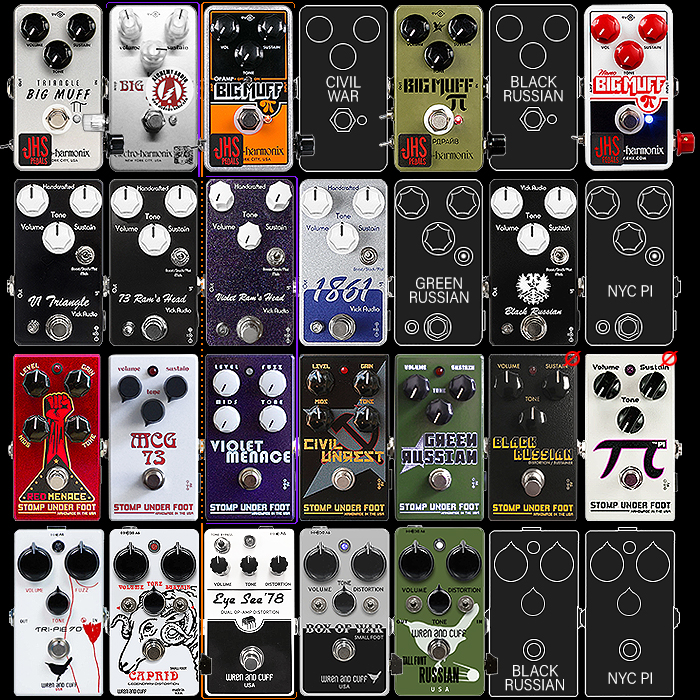
I’ve already ordered one, and will do a follow-up post with preset selections - to cover at least these 8 key varieties :
- 1969 : Triangle Big Muff V1
- 1973 : Ram’s Head Big Muff V2
- 1974 : Violet Ram’s Head Big Muffin V2B
- 1977 : Red/Black Big Muff V3
- 1991 : Civil War Big Muff V7
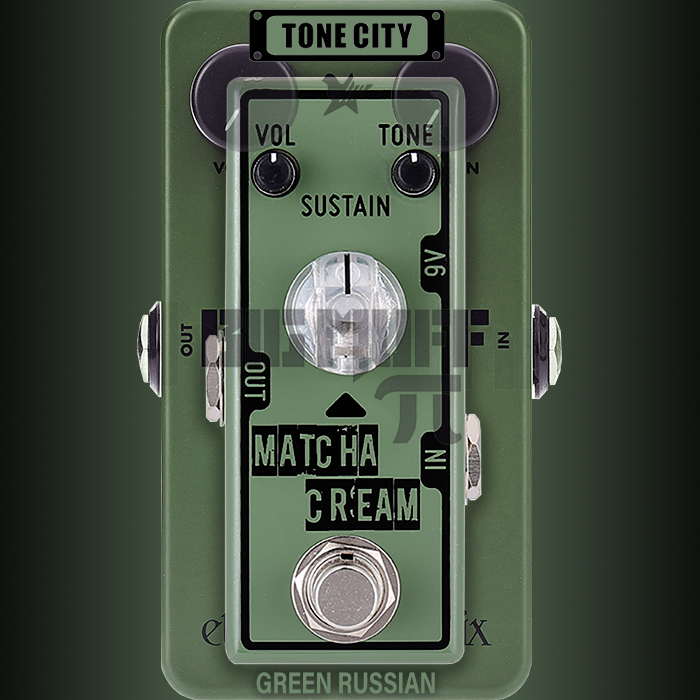
- 1994 : Green Russian Big Muff V7B
- 1999 : Black Russian Big Muff V8
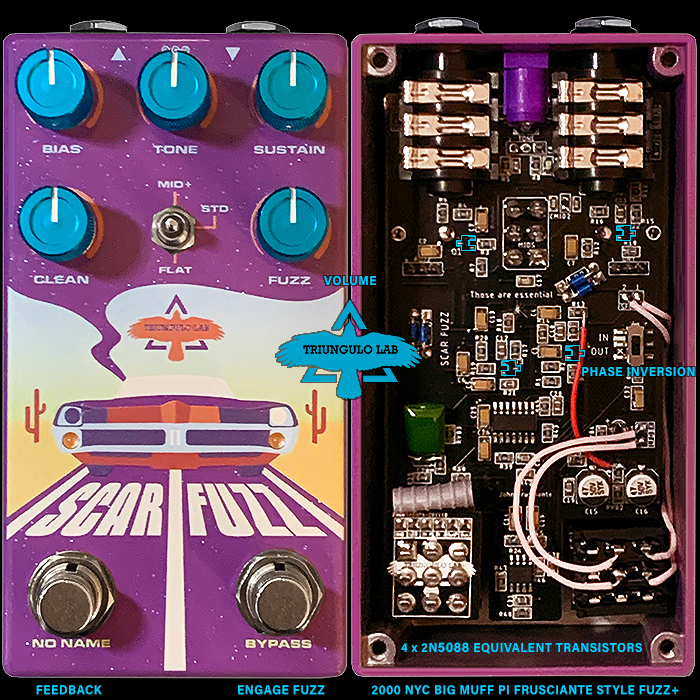
- 2000 : NYC Big Muff V9
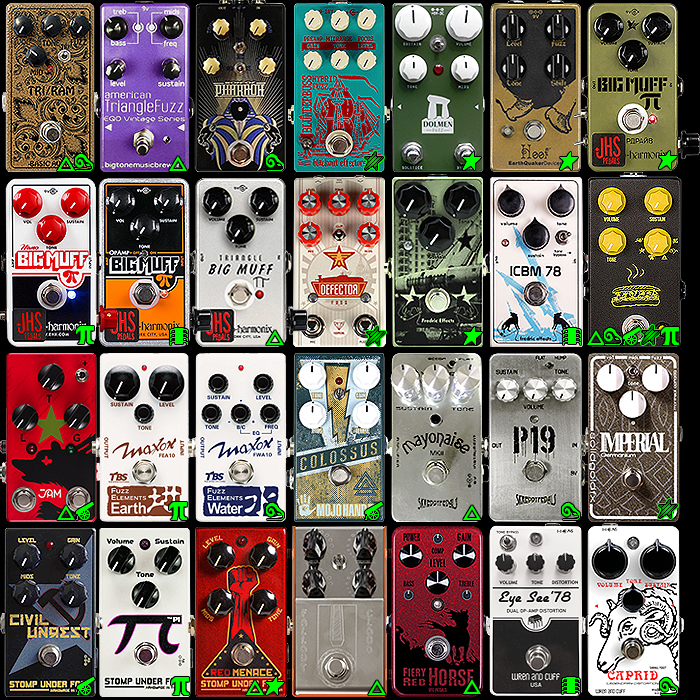
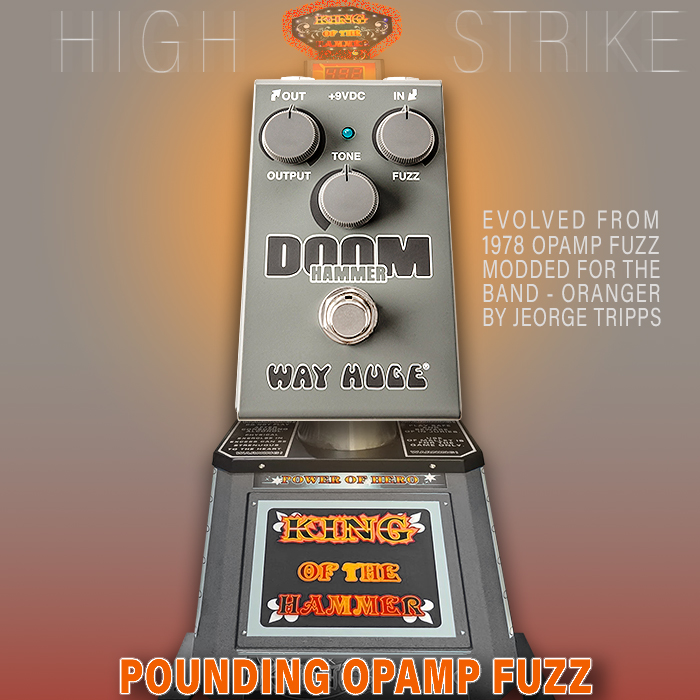
Obviously the OpAmp editions aren’t covered, where my favourite varieties tend to be Triangle, Ram’s Head, and Green Russian.
When my Big Muff Console lands - I will be experimenting with additional transistors in the Socketed Slot, which by default has 2N2222A transistors onboard. I will be further experimenting with 2N5133 Si and 2N1308 Ge transistors, and some of the rarer original choices!
Stage 1 Q4
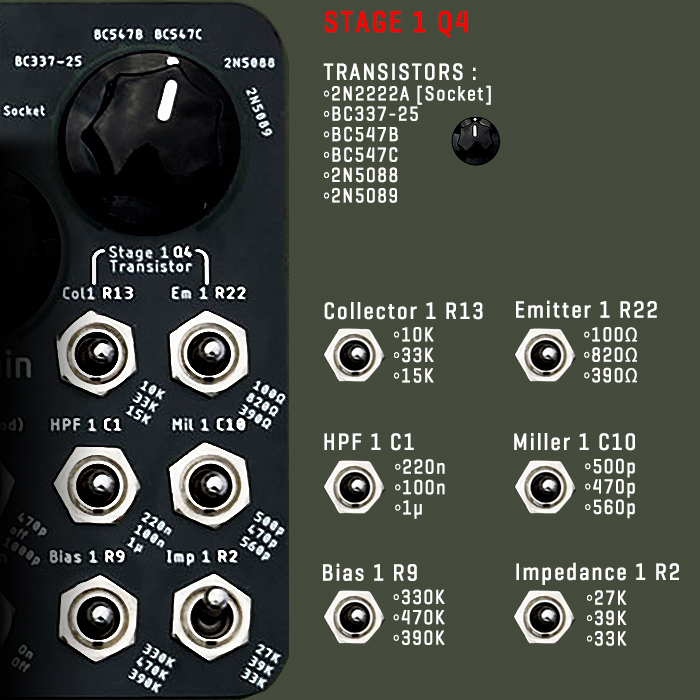
Each of the 4 Muff Gain Stages is headed by a 6-way Transistor Selector, which has these default options :
- 2N2222A [Socket]
- BC337-25
- BC547B
- BC547C
- 2N5088
- 2N5089
"For each of the 4 transistors, there are 6 device selection options. There are internal screw-terminal sockets to experiment with finding your own NPN transistors to install and test. Units are sent out with metal-can (TO-18 package) 2N2222A installed in the sockets. Using that, you could even try installing a germanium-silicon hybrid combination. Particularly with germanium in Q2 and Q3."
Each Gain Stage is accompanies by a combination of 6 x 3-way Capacitor and Resistor Options - where you can experiment with different combinations of component values.
For Stage 1 these are :
[C = Capacitor] [R = Resistor]
Collector 1 R13 : 10K / 33K / 15K
Emitter 1 R22 : 100Ω / 820Ω / 390Ω
HPF 1 C1 : 220n / 100n, 1μ
Miller 1 C10 : 500p / 470p / 560p
Bias 1 R9 : 330K / 470K / 390K
Impedance 1 R2 : 27K / 39K / 33K
To start with I will just be trialling and erroring different combinations, before latterly consulting Kit Rae's Big Muff Page to explore key version component values. There's not substitute for good ears though - I do most of my dialling in by ear - as there are parts value variances in components as well as knob tapers etc!
"Miller capacitors (C10, C12, C11) smooth out high frequencies and reduce the harshness of the fuzz character. A lower value of 470p leaves more clarity and brightness, where 560p is warmer and smoother. 500p was often used, and may be the Goldilocks in the middle. Generally when building fuzzes, are larger value may be selected when more gain is used, to remove some shrillness."
Sustain, Bright Sweep and Input Buffer
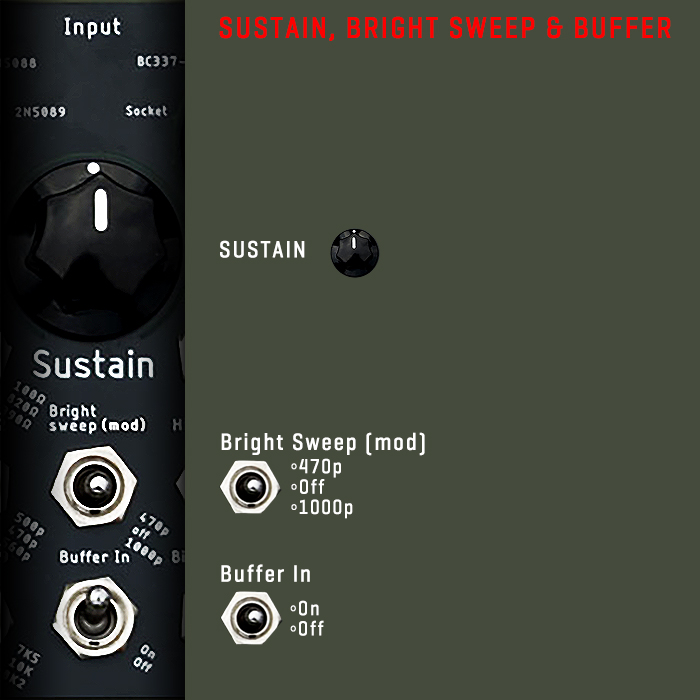
People should be famiiiar with 'Sustain' being the Big Muff Gain Level control - which also impacts the tail / sustain of the output - and hence that moniker!
We also have a Bright Sweep Mod and Input Buffer in this selection :
Bright Sweep [mod] : 470p / Off / 1000p
Buffer In : On/Off
The Bright Sweep Mod would seem to be a 3-way Bright Switch - with 2 value options or Off!
Stage 2 Q3
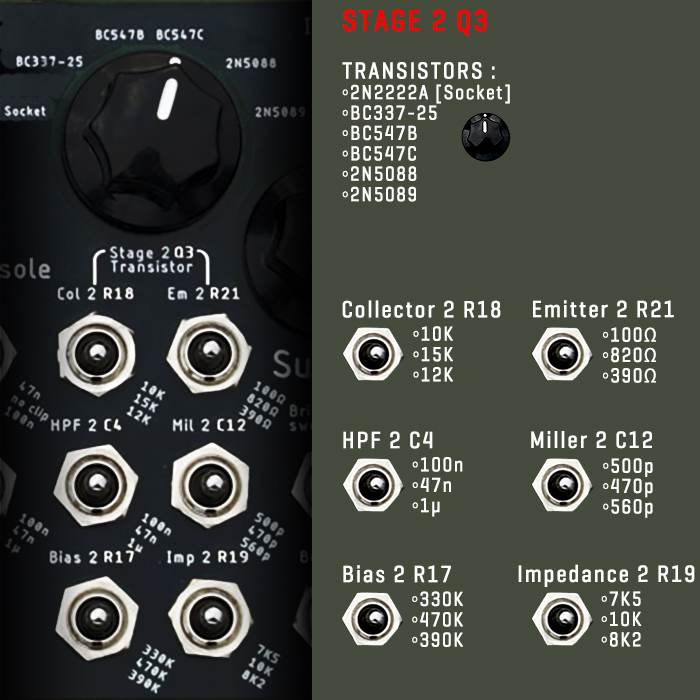
Transistor Selector :
- 2N2222A [Socket]
- BC337-25
- BC547B
- BC547C
- 2N5088
- 2N5089
Each Gain Stage is accompanies by a combination of 6 x 3-way Capacitor and Resistor Options - where you can experiment with different combinations of component values.
For Stage 2 these are :
[C = Capacitor] [R = Resistor]
Collector 2 R18 : 10K / 15K / 12K
Emitter 2 R21 : 100Ω / 820Ω / 390Ω
HPF 2 C4 : 100n / 47m, 1μ
Miller 2 C12 : 500p / 470p / 560p
Bias 2 R17 : 330K / 470K / 390K
Impedance 2 R19 : 7K5 / 10K / 8K2
Clip 1 & Clip 2
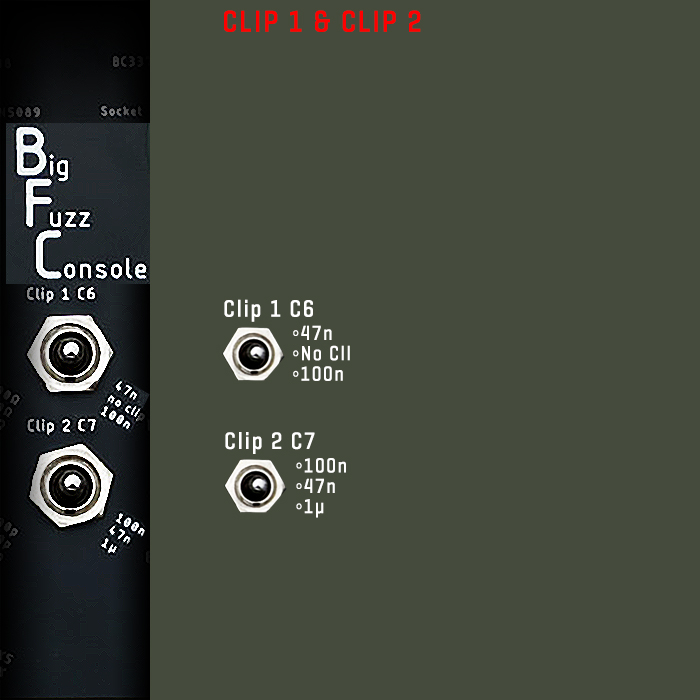
"The Clip switches are an interesting place to start. These control how much bass is clipped by the clipping diodes. 47n clips the low-end frequencies less than 100n, resulting in more bass volume and body clarity left over. 100n gives a flatter tonal compression. Setting Clip 1 to "no clip" and Clip 2 to 100n will perform like the 1973 Colorsound Supa Tone Bender.
Clip 1 is first in the signal, and help defines the boominess of the fuzz. Clip 2 later in the signal has more influence on the final tonal volumes. The Soviet versions famously stood out partly because they used 47n for both clipping positions, allowing for the most bass clarity and body.
There are no other diode options, as most circuit versions can be recommended to be built with 1N914/1N4148 small signal silicon diodes. The line had to be drawn somewhere."
Clip 1 C6 : 47n / No Cll / 100n
Clip 2 C7 : 100n / 47n / 1μ
Recap!
Stage 3 Q2
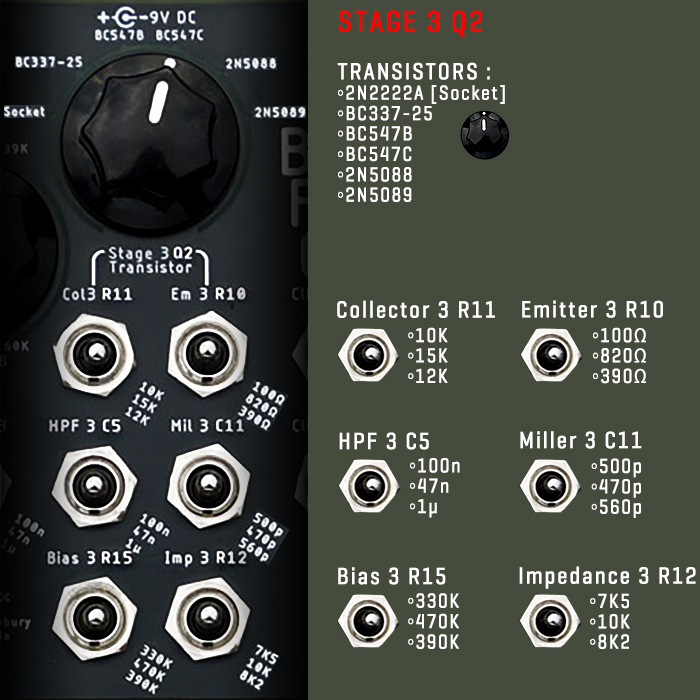
Transistor Selector :
- 2N2222A [Socket]
- BC337-25
- BC547B
- BC547C
- 2N5088
- 2N5089
Each Gain Stage is accompanies by a combination of 6 x 3-way Capacitor and Resistor Options - where you can experiment with different combinations of component values.
For Stage 3 these are :
[C = Capacitor] [R = Resistor]
Collector 3 R11 : 10K / 15K / 12K
Emitter 3 R10 : 100Ω / 820Ω / 390Ω
HPF 3 C5 : 100n / 47m, 1μ
Miller 3 C11 : 500p / 470p / 560p
Bias 3 R15 : 330K / 470K / 390K
Impedance 3 R12 : 7K5 / 10K / 8K2
EQs & Volume
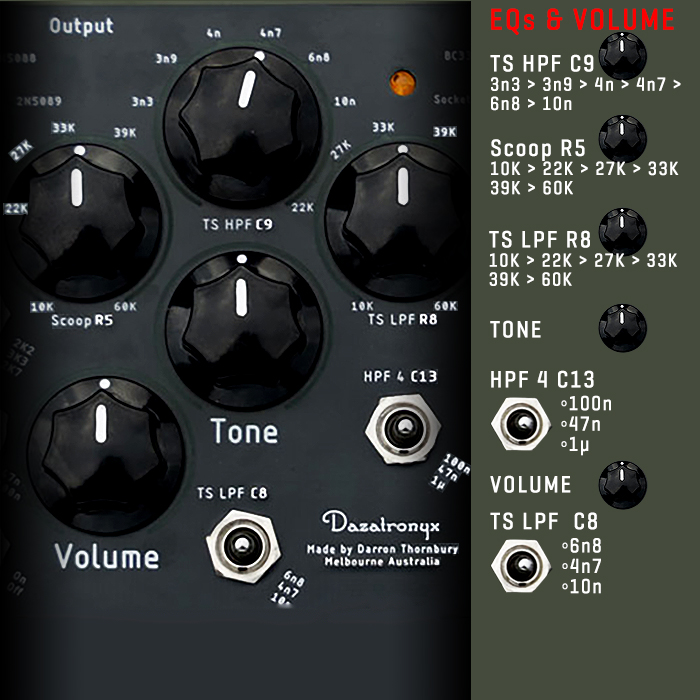
Tone Controls
"The low-high style tone control on a muff circuit can be famously love-hate, and was a large contributing factor to the tonal variations between the many models. All of the tone control options are sectioned together, between Stage 3 and Stage 4."
"With the TS HPF (Tone stack high pass filter) capacitor C9, starting with 10n will give a flatter tone control. As you rotate left to lower value capacitors, you really start to hear the signature muff-flavoured mid scoop get more pronounced."
"The Scoop control (R5) reduces the depth of the tone control scoop. Since the scoop is usually mids-heavy, it works to flatten that mid scoop back out. Most classic models used a lower value here such as 22K, and increasing this is more of a mod. Balance this with TS HPF (C9)."
"10n was a common value for the TS LPF (Tone stack low pass filter) capacitor C8."
"Lower values were common for TS LPF (Tone stack low pass filter) resistor R8."
TS HPF C9 : 3n3 > 3n9 > 4n > 4n7 > 6n8 >10n
Scoop R5 : 10K > 22K . 27K > 33K > 39K > 60K
TS LPF R8 : 10K > 22K > 27K > 33K > 39K > 60K
TONE [classic Big Muff Tone Stack]
HPF 4 C13 : 100n / 47n / 1μ
VOLUME
TS LPF C8 : 6n8 / 4n7 10n
Stage 4 Q1
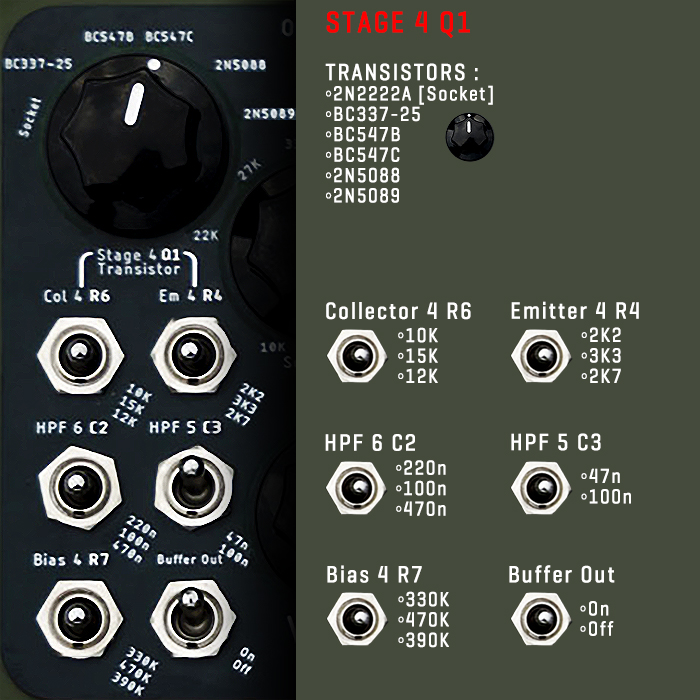
Transistor Selector :
- 2N2222A [Socket]
- BC337-25
- BC547B
- BC547C
- 2N5088
- 2N5089
Each Gain Stage is accompanies by a combination of 6 x 3-way Capacitor and Resistor Options - where you can experiment with different combinations of component values.
For Stage 4 these are :
[C = Capacitor] [R = Resistor]
Collector 4 R6 : 10K / 15K / 12K
Emitter 4 R4 : 2K2 / 3K3 / 2K7
HPF 6 C2 : 220n / 100n / 470n
HPF 5 C3 : 47n / 100n
Bias 4 R7 : 330K / 470K / 390K
Buffer Out : On/Off
Demos





Content Subscriptions