

Xploration • Curation • Recommendation


Further details emerge on the MGAT-5 Sinvertek Soldano SLO 100 Real Amp Abstraction - on the cusp of early orders being shipped out


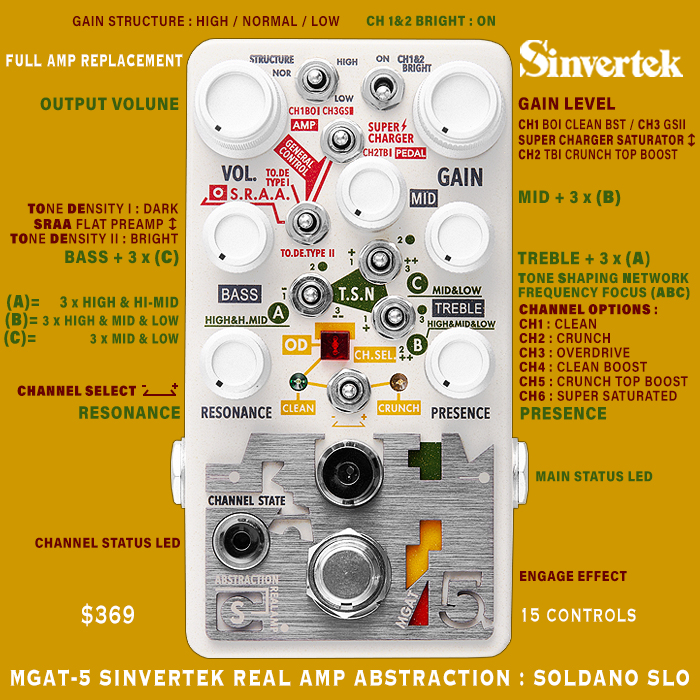
So - further details have emerged on this latest Sinvertek MGAT-5 creation - which now makes a little more operational sense to me.
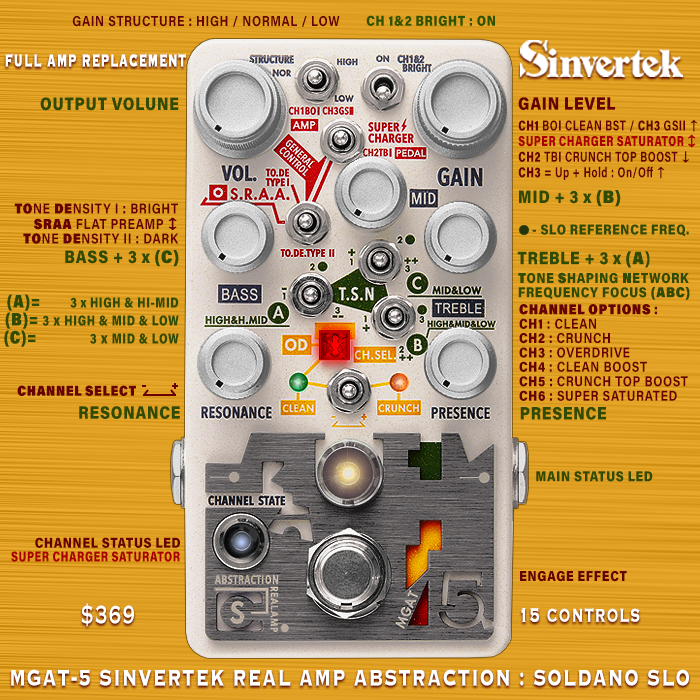
I think I’ve understood most of the acronyms now and what they stand for - where they include S.R.A.A. (Sinvertek Real Amp Abstraction), TO.DE (Tone Density), and T.S.N (Tone Shaping Network / Frequency Focus).
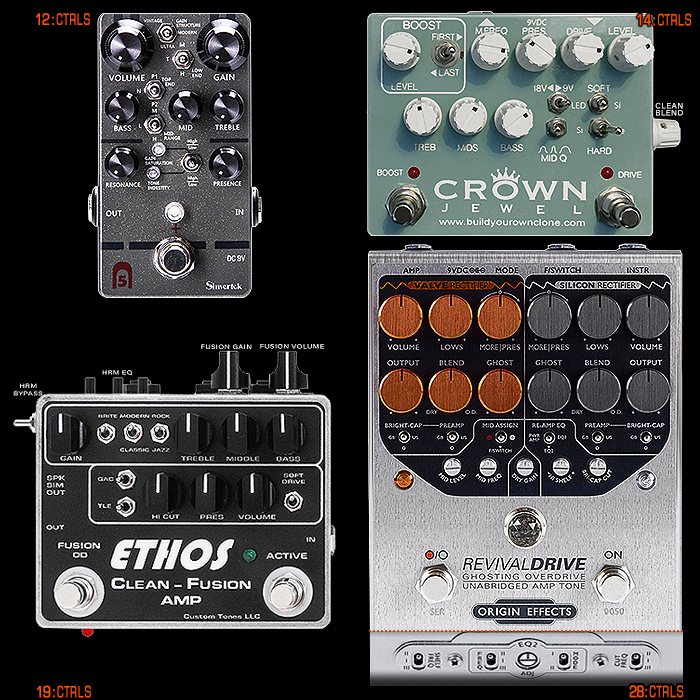
The pedal features 15 controls as far as I can gather - 7 x fully variable knobs, and 8 x 3-way toggle-switches, including a Channel Selector. That’s one more control than every N5 / MGAT predecessor!
I’ve broken the visual down into Red and Green labels - where Red represents the key Gain Controls and Adjusters, and Green represent EQ and Volume.
We have the 3 core Soldano SLO Channels - Clean, Crunch, and Overdrive CH 1-3, and we further have 3 Modified Channels - Clean Boost, Crunch Top Boost, and Super Saturated Distortion - CH 4-6 as indicated.
The Gain controls consist of (top to bottom) :
- Gain Structure : High / Normal / Low
- Super Charger ON :
- UP CH1 BO1 Clean Boost / CH3 Overdrive Gain Super Saturator
- DOWN CH2 TB1 Crunch Top Boost
- TONE DENSITY / Amp Channel Options
- UP TO.DE Tone Density Type I for going into Dark Amps
- MIDDLE o S.R.A.A. Flat Neutral Preamp Setting
- DOWN TO.DE Tone Density Type 2 for going into Bright Amps
- Channel Select Toggle ± : Clean > OD > Crunch
And the EQ and Volume Controls consist of (top to bottom) :
- CH 1&2 Bright : ON
- Volume
- Bass
- Mid
- Treble
- Resonance
- Presence
- T.S.N. Tone Shapping Network / Frequency Focus A / B / C clusters
- (A) : High & High Mid Frequency Focus x 3 - with reference to Treble control
- (B) : High & Mid & Low Frequency Focus x 3 - with reference to the Mid control
- (C) : Mid * Low Frequency Focus x 3 - with reference to the Bass control
Note that I’ve interpreted T.S.N. as Tone Shaping Network, but it could also be Tone Signal Network - I feel the first and last words are definitely correct - while I’m not 100% sure about the ’S’ initial! It could even stand for Tube Sound Network or similar - while it seems most likely something to do with Tone and Network - which are descriptives Mr Wu uses in other parts of his text!
The Clean, Crunch and square OD LEDs all light up to show which Channel you're on, presumably Channel State indicates the modified channels : CH 4-6. And the central sort of smartphone camera aperture element is the Main Status LED presumably.
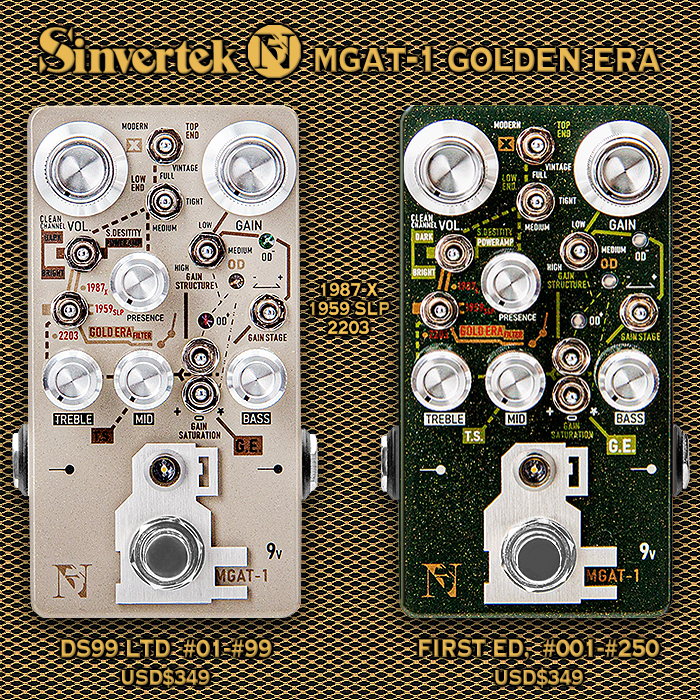
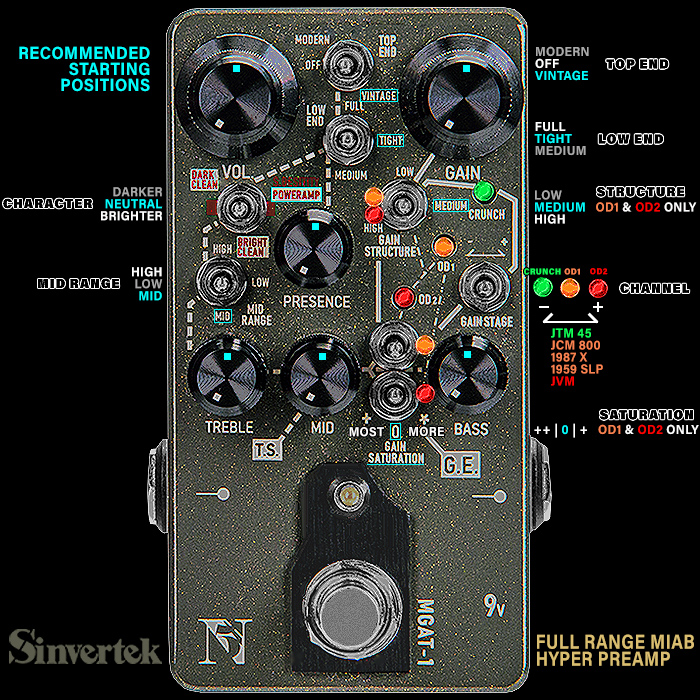
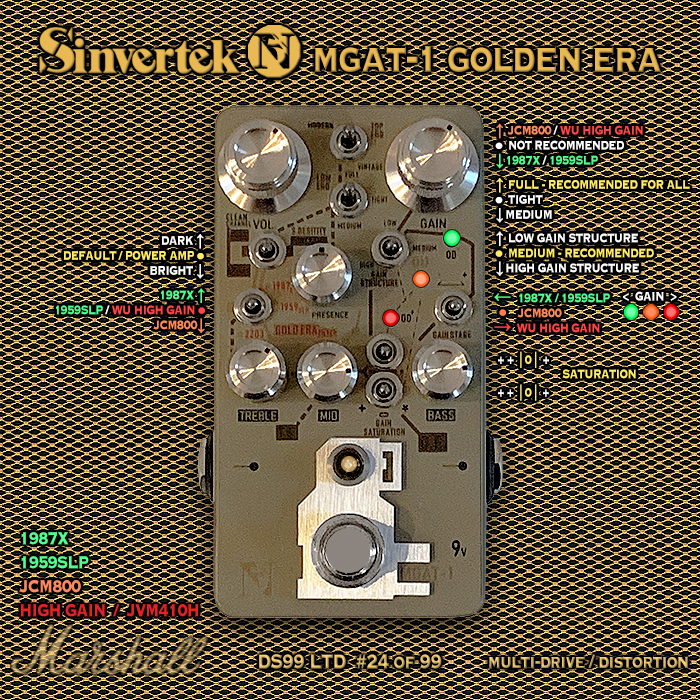
There are of course no videos out yet, and probably won't be for a while - so I will likely reference an MGAT-1 GE demo.
We still don't have a full manual - so there aren't explanations for all parts of the circuit yet on the Sinvertek site- but I believe I've mostly got the gist of it now. It will of course take a little hands-one experience to get fully into that mindset - but it all looks just as promising as its predecessors - and we have an even further evolved design here - which players are going to need to get the feel for.
The first 99 of these are special editions featuring select Vintage Transistors from Mr Wu's own collection - so there is some urgency in placing an order. Supposedly these will be shipped from California as usual - so my USA buddies - including Henry Kaiser and Michael Aschoff will likely get theirs at least a week or two before me!
I paid for mine on Tuesday May 6th - $368 plus $20 shipping - where I expect there will be a fairly lofty import and customs fee bill still to come - which was £80 last time around (circa $110) - and as the price is slightly higher this time around - the import fees will be even more this time - I reckon around £100 - which makes this a very pricey acquisition. It was for this reason that the SHODA / SHODB offerings made no sense for me - I would have had to pay exorbitant fees to get those to the UK - so I had to pass on those alas. While I'm not going to miss out on a new N5 / MGAT variant - which are already many of my favourite all-time distortion pedals.
The MGAT-1 GE is already incredible - but Mr Wu always manages to eke out one more level of satisfaction with every release - so this one should be stratospheric!
I'm really looking forward to landing this one - hopefully during the first half of June! I had expected some to be shipped out by the end of the month - but that does not appear to be happening as of my writing this!
Here below then is an MGAT-1 GE Demo to tide you over until the first MGAT-5 Demos emerge!
You can read up further on the Sinvertek MGAT-5 SRAA Page - which helped my enormously in composing this article - but did not give me all the answers - so there's a little extrapolation carried out for this exercise!
I will deliver an even mote derailed text - once I've received and experience by unit for at least a week or so!
Fidelity Reference - MGAT-1 GE