

Xploration • Curation • Recommendation


The Meris LVX True Stereo Modular Delay System issues major challenge to all Delay Workstations!


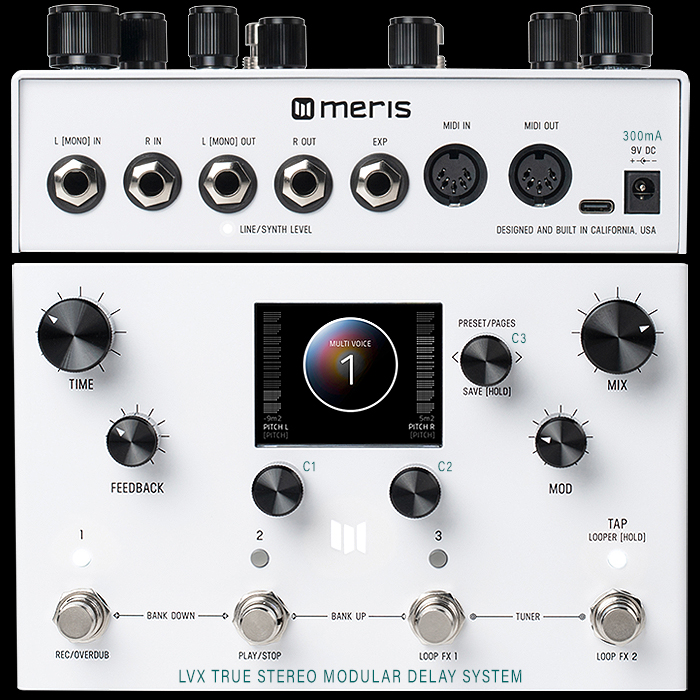
Meris may very well have a new champion on the block with its new LVX Modular Delay System. If features an attractive full-colour screen with ’Fractal Bubbles’ interface for building up your own favourite personal delays from an incredibly wide array of parameters and secondary effects, modulations and modifiers!
I would imagine there is something of a learning curve here, and some things at least superficially seem a little clunky - but I imagine that once you get used to this then you should really feel the benefit - and there’s nothing really like this out there besides something like the Empress Zoia and Poly Beebo - while the Meris hands-on interface / menu system seems a touch more intuitive than those.
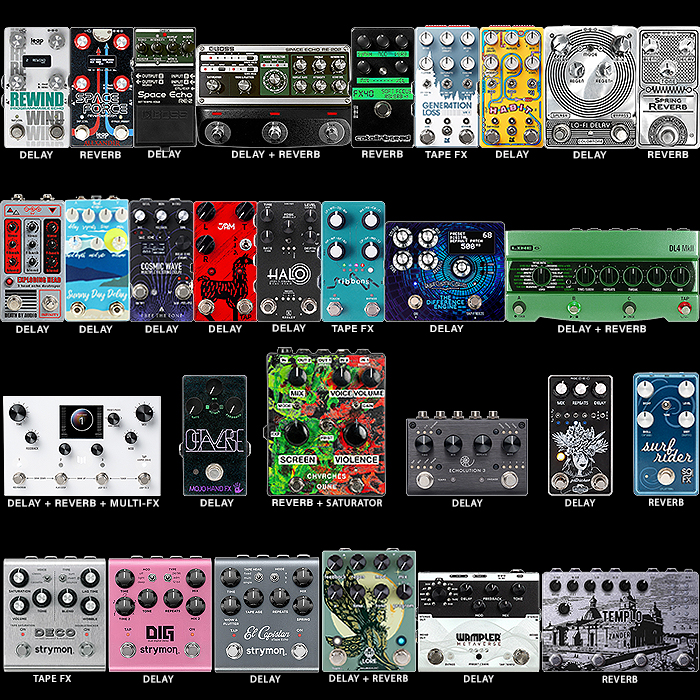
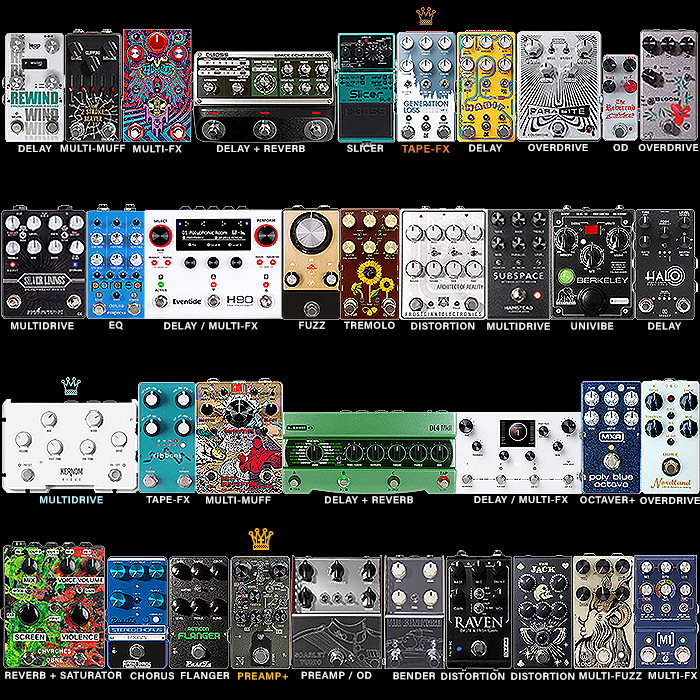
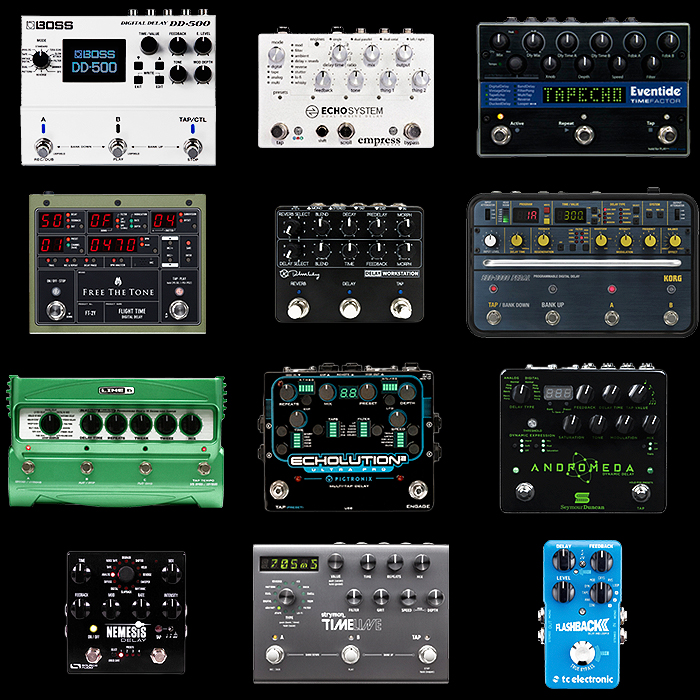
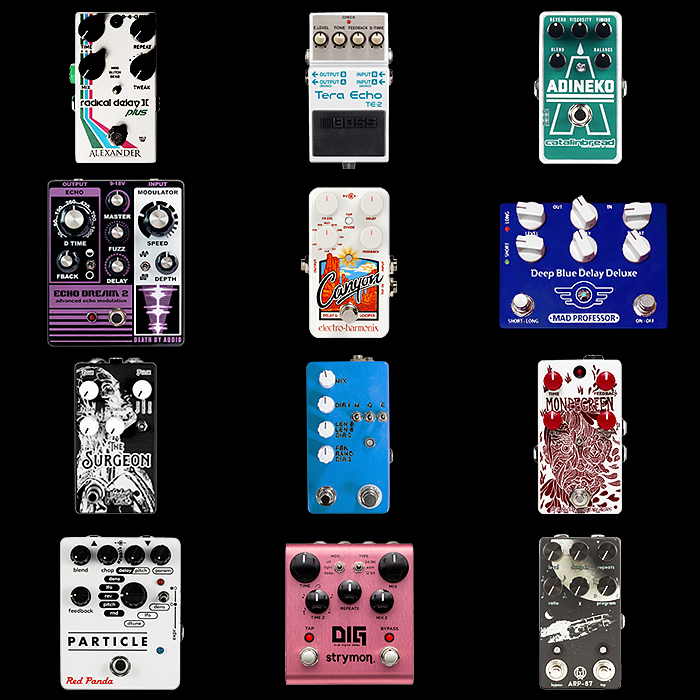
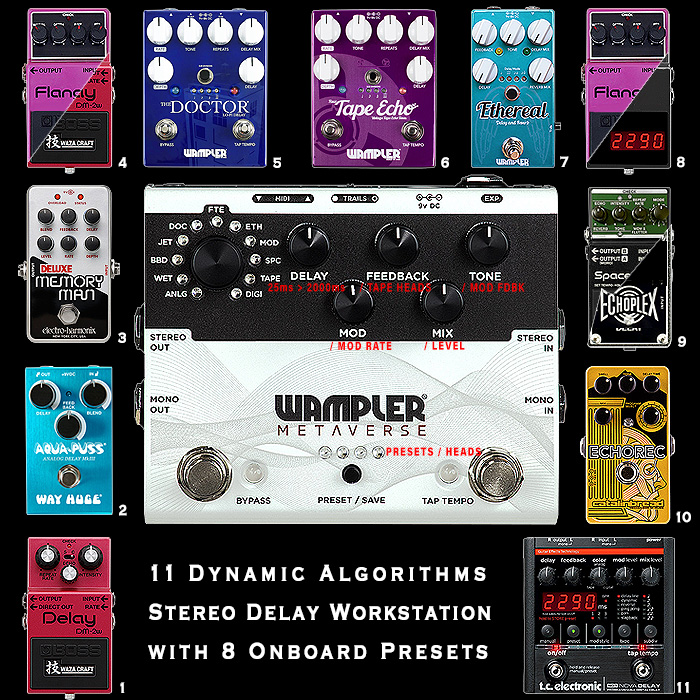
I immediately fear for my current and incumbent King of the Delay Workstations - the Empress EchoSystem - with its 42+ algorithms and Dual-Channel playback. I believe the LVX also has the equivalent of Dual-Channel playback where you set different parameters for Left and Right channels. Price differential is significant with the EchoSystem at $449, and the LVX at $599. But Meris have really thrown the kitchen sink into their unit - even adding a Precision Tuner mode, which I’m not sure is strictly necessary - but hey!
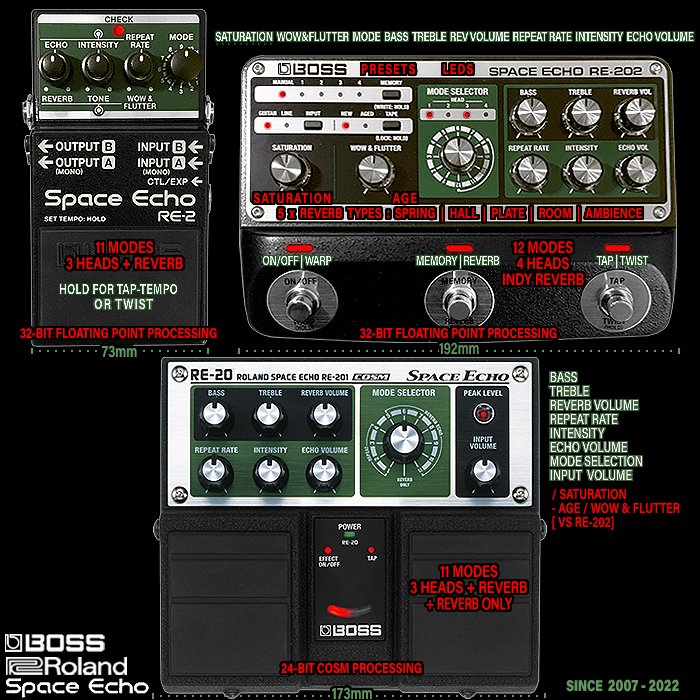
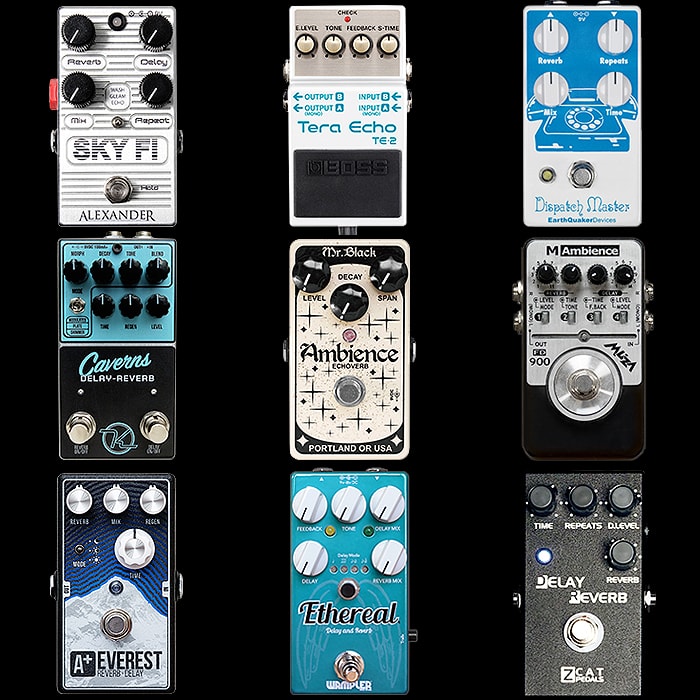
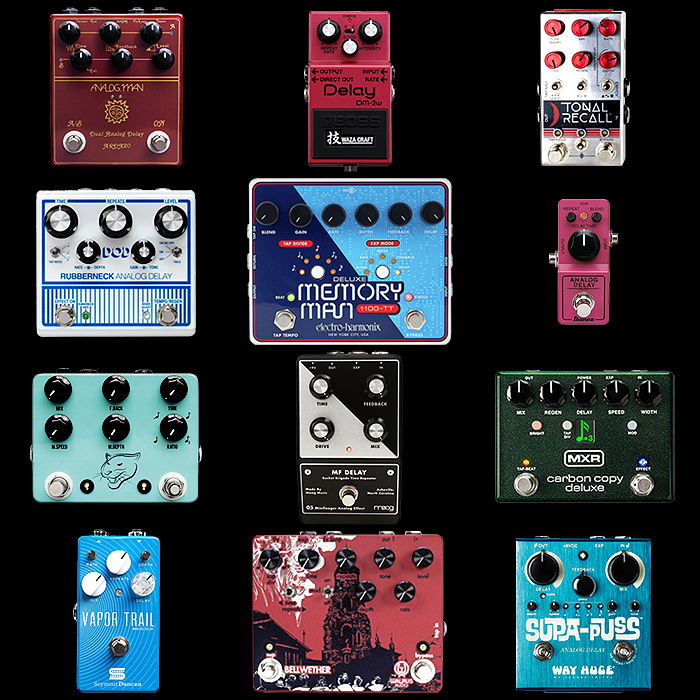
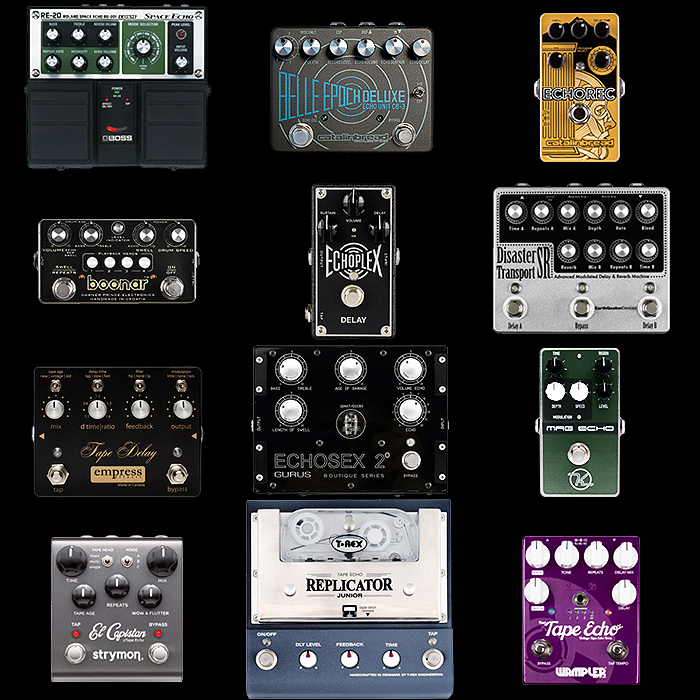
My top choice of delay type is still Tape-Style - with the Boss RE-202 pretty safe in that position. Besides the EchoSystem - it’s the new Line 6 DL4 MKII which is most under threat - in fact this LVX is also an extended Delay Workstation with 4-Footswitch Looper - while at $299 the DL4 comes in at half the cost of the LVX.
Size-wise the LVX is really decent - the same exact height as regular Meris units, but about half as wide again - so relatively speaking it should be about as slimline as it can be.
I need to do a little more due diligence on the LVX but I think it may very well be my next Delay Workstation - which I will then alternate / rotate with the RE-202!
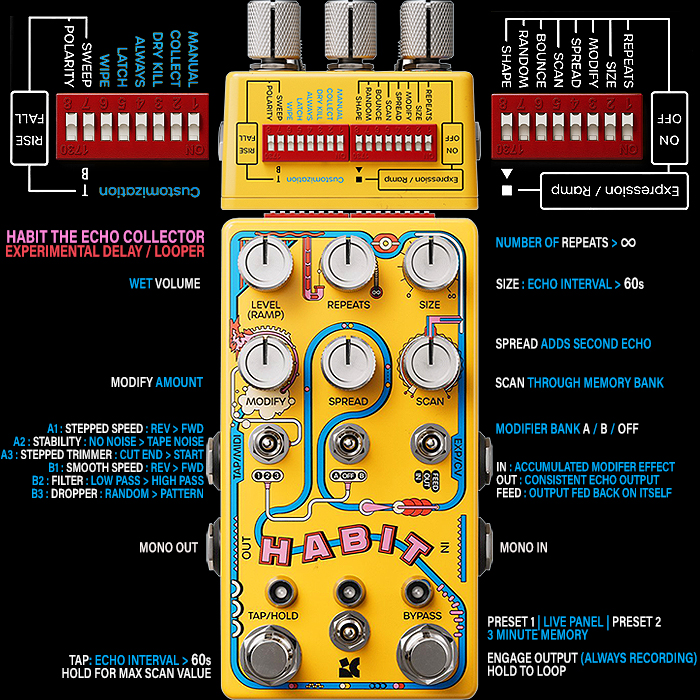
For me the LVX is a sort of Build-a-Delay unit - not too dissimilar in concept to Strymon’s NightSky Build-a-Reverb.
Here then are all the details I’ve been able to glean thus far (mostly from the manual!) :
The Interface
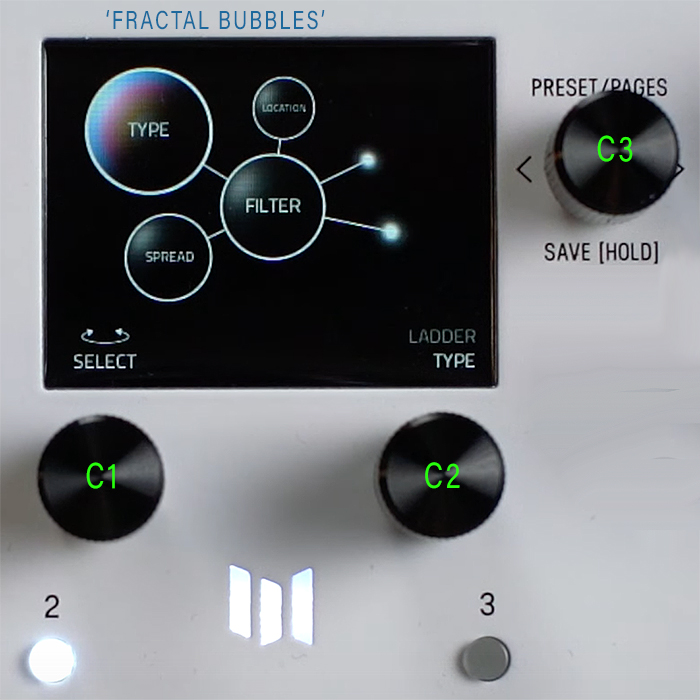
On the outside of the pedal you have the 4 fixed parameter knobs as labelled, while the main control interface is just the screen and the 3 push/twist knobs in its immediate vicinity labelled C1, C2, and C3 in my visuals. C3 is the main Rotary Encoder essentially - where you select the various Presets / Pages / Algorithms, and Hold to Save. C3 is were you rotate and bring the various 'Bubbles' into view before selecting and diving down into the parameters. C1 and C2 are in-context parameters dependent on what appears in the bottom corners of the screen. You can deploy your 2 Favourite Parameters per Preset - so they are quickly and easily manipulated via C1 and C2.
Controls - Time, Feedback, Mix, Mod, C1, C2, C3 : Preset / Pages + Hold for Save, Footswitches 1-3 + Tap, Hold Tap for Looper - which has Rec / Overdub, Play / Stop, Loop FX 1, and Loop FX 2, combine pairs of footswitches for Bank Down / Up, and Tuner.
Seems like quite a lot of scrolling is required here as there are so many different Parameters and Types that can be selected and applied - as we shall see via the Types, Structures, Modifiers and Processing Elements below :
7 Key Features
- Limitless Modularity
- Stereo Looper
- Full Size Midi In/Out
- 99 Presets
- Advanced ARM Processor
- True Stereo Processing
- Precision Tuner
3 Delay Types
- DIGITAL - uncoloured completely clean delay line, here the front panel mod knob ranges from slow and wide modulations at minimum, to fast and narrow at maximum
- BBD - analog flavoured bucket brigade coloured delay lines, here the mod knob adds depth to the classic lfo
- MAGNETIC- tape flavoured delay with a slight saturation and gentle degradation, here the mod knob increases the amount of wow and flutter
5 Delay Structures
- STANDARD [Stereo Parallel Delay Lines] - Parameters : Time, Left Note Division, Right Note Division, Feedback, Crossed, Mod.
- MULTITAP [8 tap delay with 4 taps dedicated to each side, 1<4 Left, and 5-8 Right] - Parameters : Time, Left Note Division, Right Note Division, Feedback, Crossed, Mod, Tap 1>8, Level 1>8, Pan 1>8.
- MULTI FILTER [Same as MultiTap but with separate Bandpass filter at the output of each tap] - Parameters : Time, Left Note Division, Right Note Division, Feedback, Crossed, Mod, Tap 1>8, Filter 1>8, Q 1>8, Level 1>8, Pan 1>8.
- POLY [Poly is a dual version of the Polymoon delay with separate algorithm per stereo channel] - Parameters : Time, Left Note Division, Right Note Division, Feedback, Crossed, Mod, Dimension, Multiple, Level, Left Modulation, Right Modulation.
- REVERSE [Stereo Parallel Delays with Reverse Playback] - Parameters : Time, Left Note Division, Right Note Division, Feedback, Crossed, Mod.
5 Modifiers
- LFO A MODIFIER - Speed, Note Division, Shape : Ramp Up / Ramp Down / Triangle / Sine / Square / 3↑ /3↓ / 4↑ / 4↓, Assign, Minimum, Maximum.
- LFO B MODIFIER - Speed, Note Division, Shape : Ramp Up / Ramp Down / Triangle / Sine / Square / 3↑ /3↓ / 4↑ / 4↓, Assign, Minimum, Maximum.
- ENVELOPE MODIFIER - Attack Time, Decay Time, Shape : Linear / Exponential / Clipped Attack, Assign, Minimum, Maximum.
- SAMPLE & HOLD MODIFIER - Speed, Note Division, Assign, Minimum, Maximum.
- SEQUENCER MODIFIER - Speed, Note Division, Assign, Step 1>16.
25 Processing Elements across 5 Categories
- DYNAMIC ELEMENTS - Compressor / Swell / Diffusion / Limiter.
- PREAMP ELEMENTS - Volume / Tube / Transistor / Opamp / Drive / Bitcrusher.
- FILTER ELEMENTS - Ladder Filter / State Variable Filter / Comb Filter.
- PITCH ELEMENTS - Poly Chroma / Harmony / Micro Tune / Mono Chroma / Lo-Fi.
- MODULATION ELEMENTS - Chorus / Flanger / Dynamic Flanger / Casette (Warble) / Ring Mod / Barberpole / Granulize.
Features and Specs
- Modular Delay System architecture
- 2540mS of Highly Configurable Dual Delay
- Advanced ARM Processor
- Configurable Delay Structures, Types, and Processing Elements for the ultimate customization in delay processing
- Intuitive Color Screen based User Interface
- Always Available True Stereo 60 Second Looper
- 99 Preset Locations in 33 Banks
- Favourite Preset Bank for instant access to your 3 favorite presets
- Instant Access Tuner with configurable Reference and Output mode
- Deep Modifier Section lets you Route Control Signals to Processing Parameters
- True Stereo Processing Elements (Poly Pitch Shifter operates in mono)
- All New Processing Elements including Preamps, Granulize, Cassette, Poly Pitch, and more
- Includes Processing Elements from the Meris family: Polymoon, Hedra, Enzo, and Ottobit Jr.
- Selectable Note Divisions for each side of the stereo Dual Delay
- Digitally controlled Analog mix bus
- Full Stereo input and output with separate jacks for each
- Switchable input/output headroom level for Instrument or Synthesizer / Line levels
- MIDI In and Out over standard MIDI Din Jacks
- Assignable Expression Pedal control for multiple parameters simultaneously
- Dedicated Expression Pedal Jack
- MIDI implementation for Continuous Control Parameters
- MIDI Preset Send and Receive
- MIDI beat clock synchronization
- Premium analog signal path and 24-bit AD/DA w/32 bit floating point DSP
- Premium Analog Devices JFET input section
- Dimmable screen and logo light
- Color : white powder coat with fine iridescent flake
- Conversion : 24 bit A/D and D/A
- DSP : 32 bit floating point
- Sample Rate : 48000 Hz
- Input Impedance : 1 Meg Ohm
- SNR : 115 dB Typical
- Frequency Response : 20Hz-20kHz
- Max Input Level : +9 dBu (instrument level setting) | +12.5 dBu (line/synth level setting)
- Power : 9V DC center-negative, 300mA, 2.1mm jack
- Bypass : Selectable True Bypass (Relay) or Analog Buffered Bypass
- Dimensions : 7.25” wide, 4.5” long, 2” tall
- Weight : 24 ounces
- MAPP / RRP : $599 / €729 / £619
- Designed and built in California, U.S.A.
Demos